If you’re only going to visit one attraction in Spain, it has to be the Moorish Alhambra Palace in Granada, Spain’s most important monument and an architectural gem.
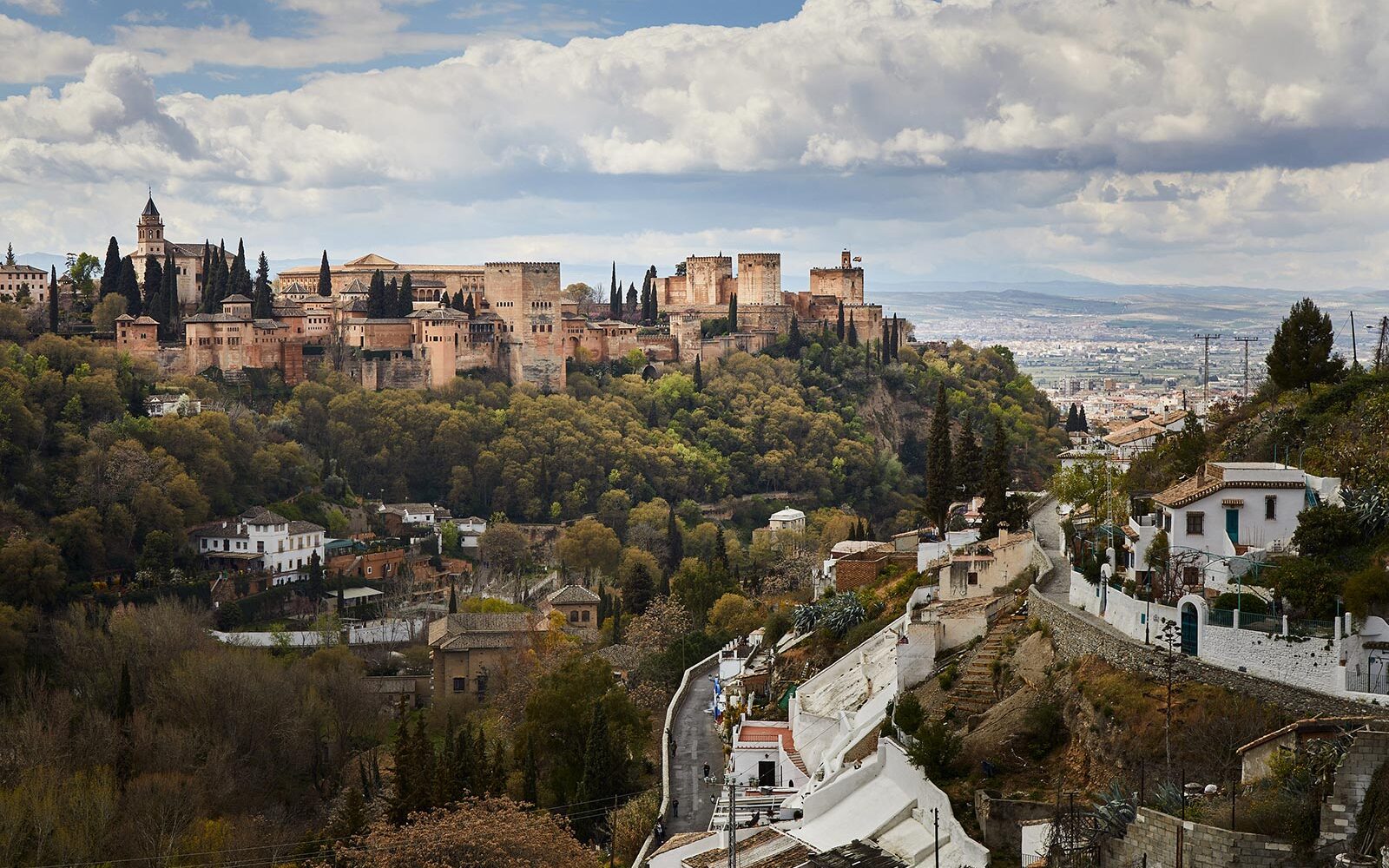
On a hill above the Andalusian city of Granada sits the gigantic Alhambra Palace, considered one of the 10 wonders of the world.
The impressive Moorish palace, made up of gardens, palaces and fortifications, is Spain’s most important monument and major tourist attraction. In 1984, the Alhambra in Granada became a UNESCO World Heritage Site and is visited by two million people every year to admire one of the world’s finest examples of Moorish architecture, gardens and construction.
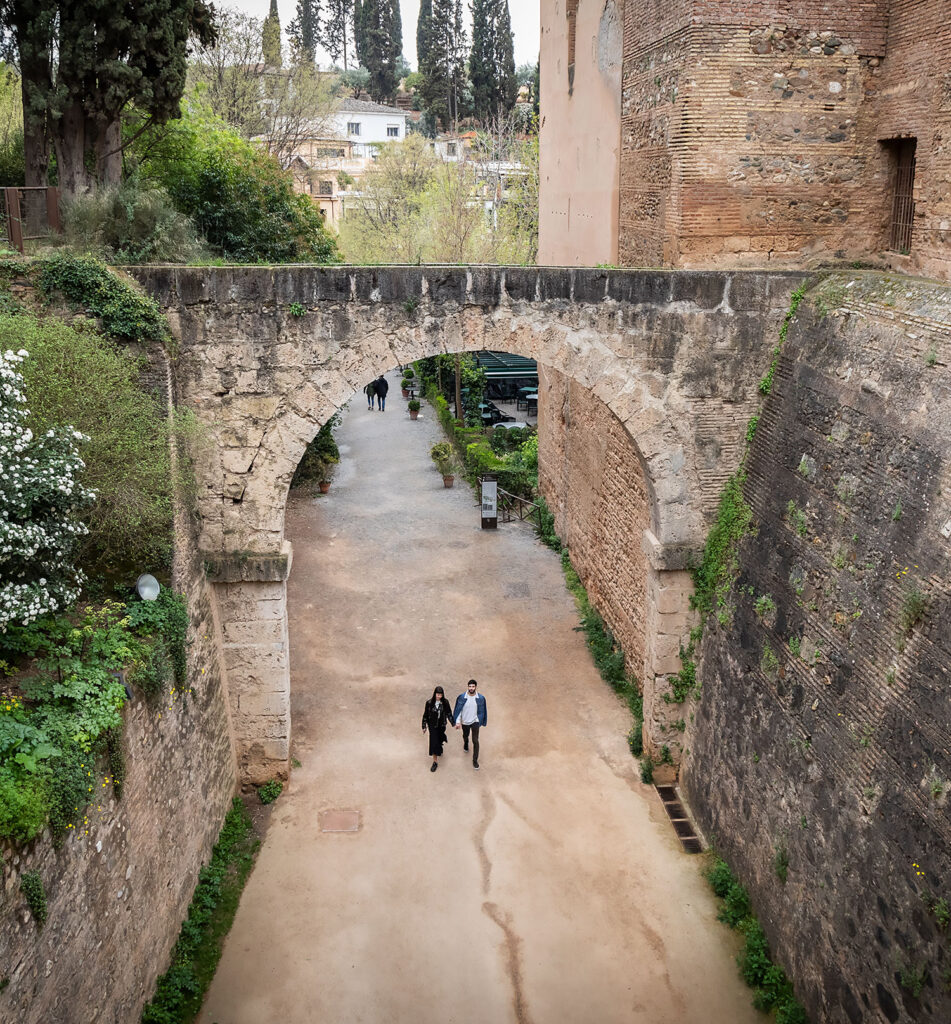
The Alhambra is named after the reddish walls and towers that surround the citadel, and the name comes from the Arabic word al-qal’a al-hamra , which means “red castle or fort”. The Alhambra in Granada is often referred to as the “Red Castle”.
The monumental palace spreads over 26 hectares with over 1 kilometer of walls and 30 towers.
Explore the magnificent palace and be mesmerized by the exquisite Arabian architecture. Set aside at least half a day for your visit to the Alhambra in Granada and buy tickets well in advance. Read how to get tickets to the Alhambra at the bottom of the article.
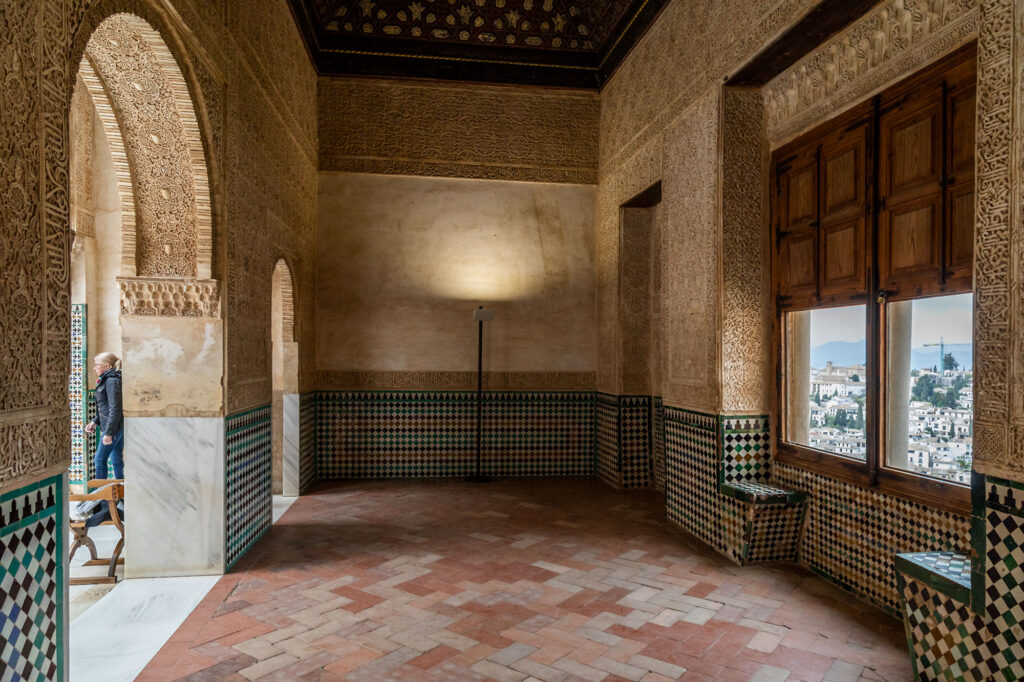 Palace of the Sultans in Granada
The beautiful complex of the Alhambra was built from the 9th century, first as a small fortress and then expanded by several sultans. The now famous palaces were built by the Nasrid dynasty (1232-1492) in the 14th century.
Here, successive sultans lived in the most beautiful palaces with stunning views of Granada below and the Sierra Nevada mountain range in the background. The last sultan of the Nasrid dynasty, Boabil, left the Alhambra in 1492 when the Christian Spaniards drove the last Moors from the land.
When you visit the Alhambra in Granada, you’ll pass through four main areas, the Nasrid Palaces, Generalife, Carlos V Palace, Alcazaba and several gardens.
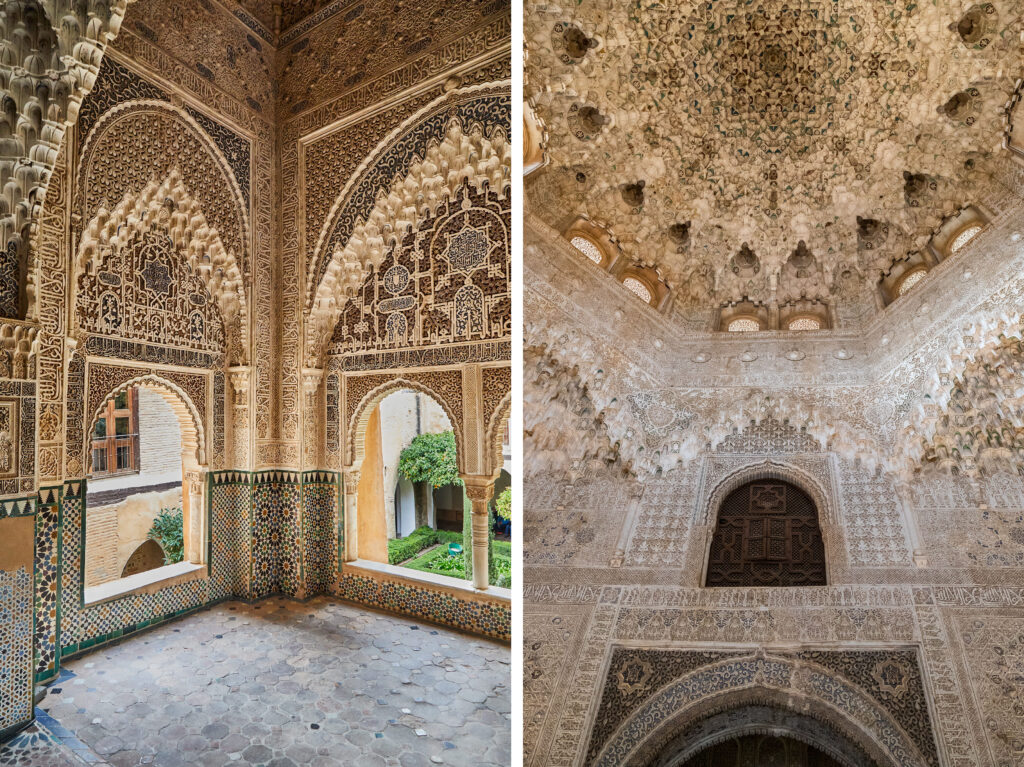
Nasrid palaces
Step into an oriental fairy tale of symmetrical courtyards with fountains and sculptures and further under archways and ceilings intricately decorated with ornamentation and Arabic inscriptions. Pass walls with tile mosaics in the most beautiful colors and fine tile and marble floors.
Welcome to the Nasrid Palaces, consisting of three palaces and the most mesmerizing of the Alhambra.
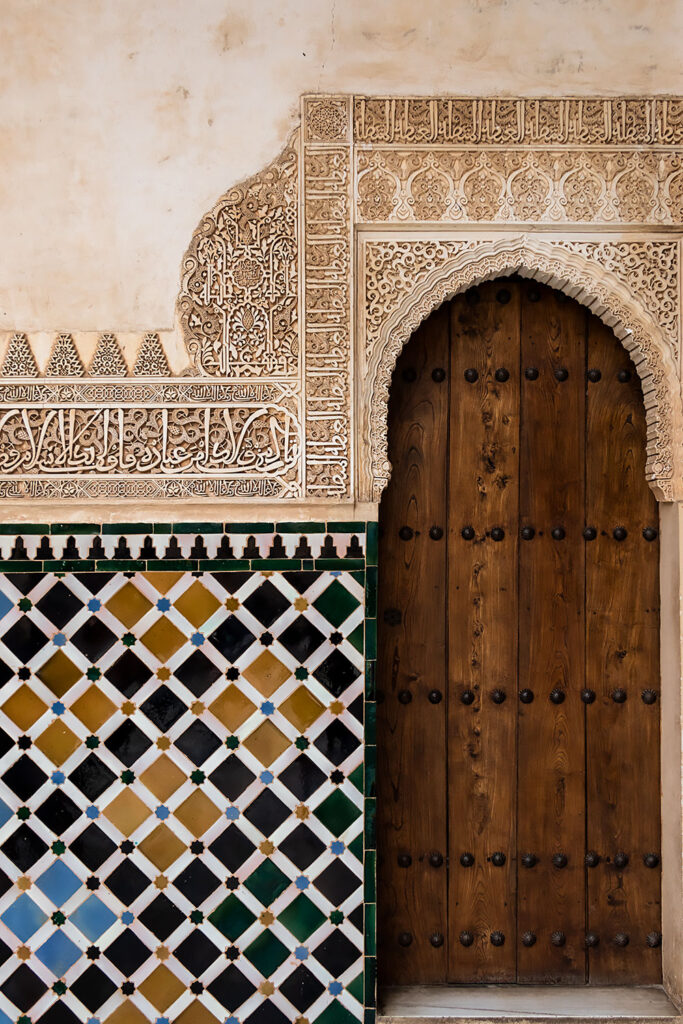
The Nasrid palaces are divided into an official part for administration and state affairs, the Comares Palace, which was the official palace of the king, and the private Palace of the Lions, where the harem was located.
The Lion’s Palace stands out from the others by also being decorated with Christian influence, which you can see in some of the inscriptions, artwork and ornamentation.
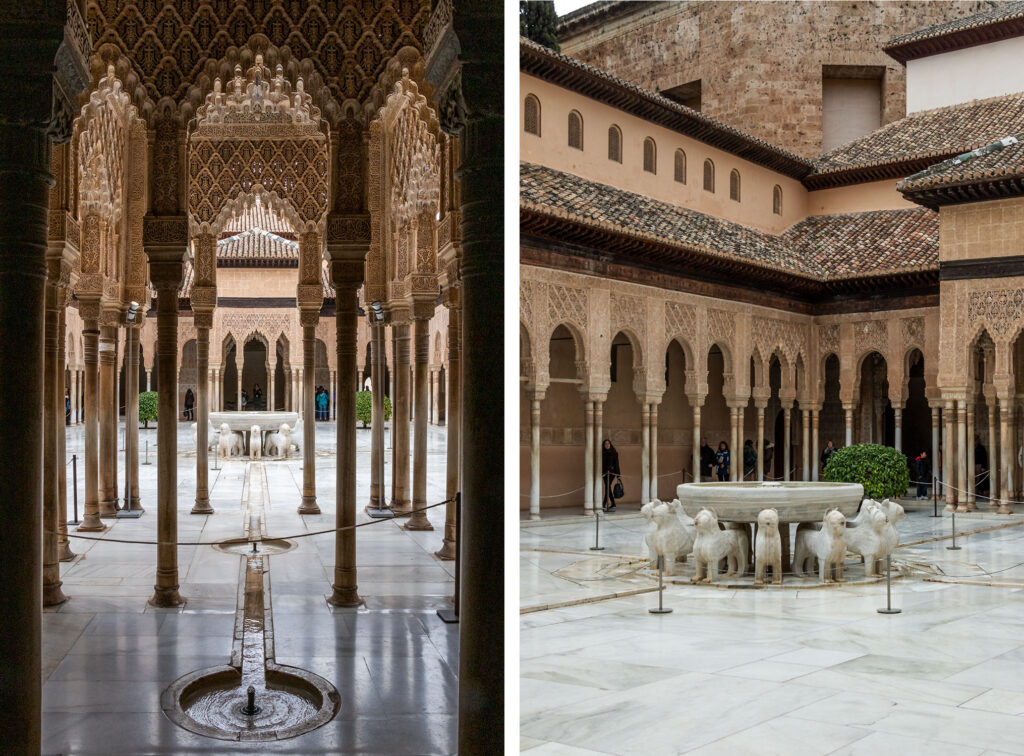
The barnyard
The Lion Courtyard is the main courtyard of the Nasrid Palaces and the most photographed place in the Alhambra in Granada. The courtyard is named after the central lion fountain, which is surrounded by 12 lions. Note that the lions are not very detailed compared to the other decorations in the palaces. This is due to the Muslim religion, which avoids creating images of living creatures.
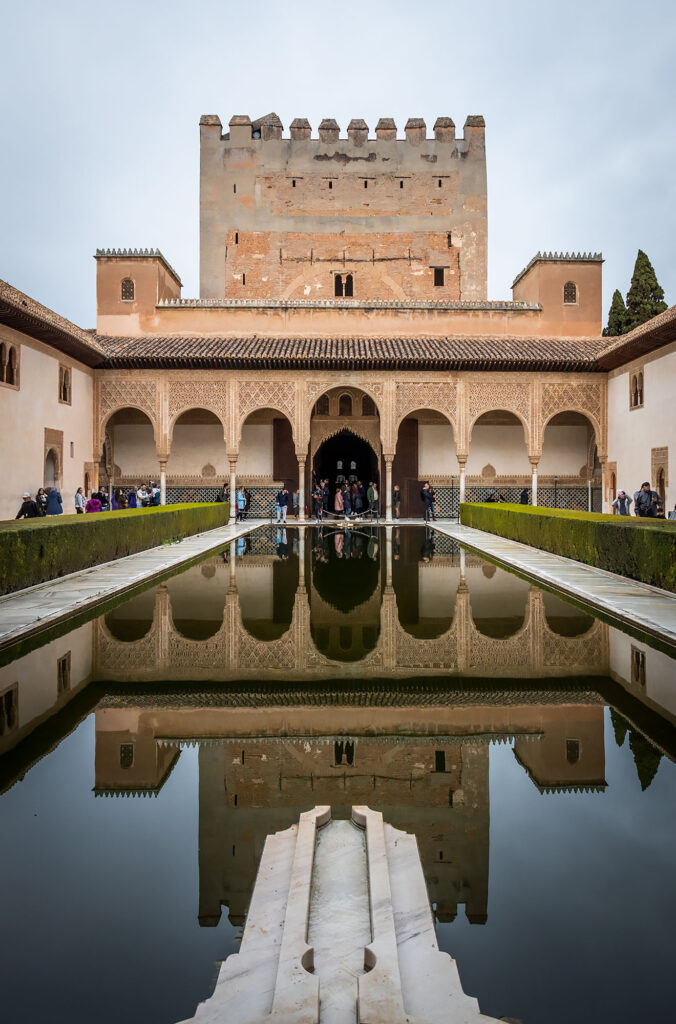
Myrtle Farm
The Myrtle Garden is also one of the magical courtyards of the Nasrid palaces.
It is a beautiful example of the beauty of simplicity in Arabic architecture. Even with the palaces’ many detailed and complex ornamentations, the complex as a whole is created in simple, clean lines.
The palace is reflected in the long pool, highlighting both symmetry and detail in the archways.
The Myrtle Courtyard is named after the myrtle bushes that surround the pool and create a beautiful contrast to the white marble of the courtyard.
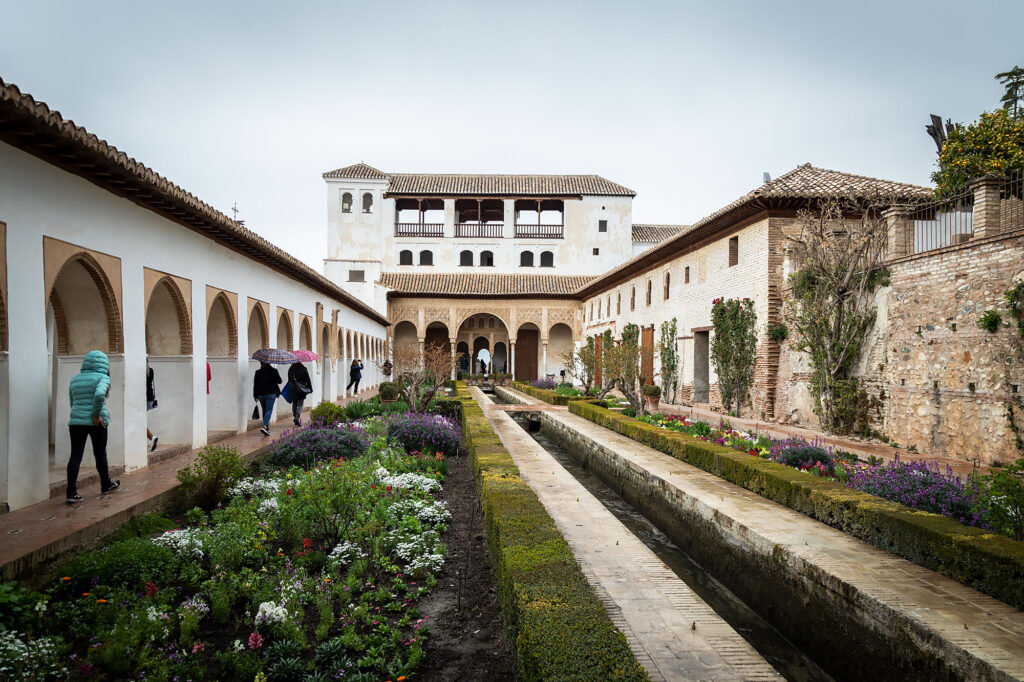
Generalife
The Generalife is beautifully situated on a gentle hill with stunning views of Granada city, valleys and rivers. The palace was the sultans’ sanctuary where they could retreat from the public.
The Generalife was built in the 13th century and later remodeled by both sultans and Christians when they took over. Therefore, it is difficult to know what it looked like in its original form. However, the Generalife differs from the Nasrid palaces by being much simpler in design. There are no large ornaments and decorations, which emphasizes that it was a place for peace and quiet.
The lush courtyard is central and inside there are several arched windows offering picturesque views.
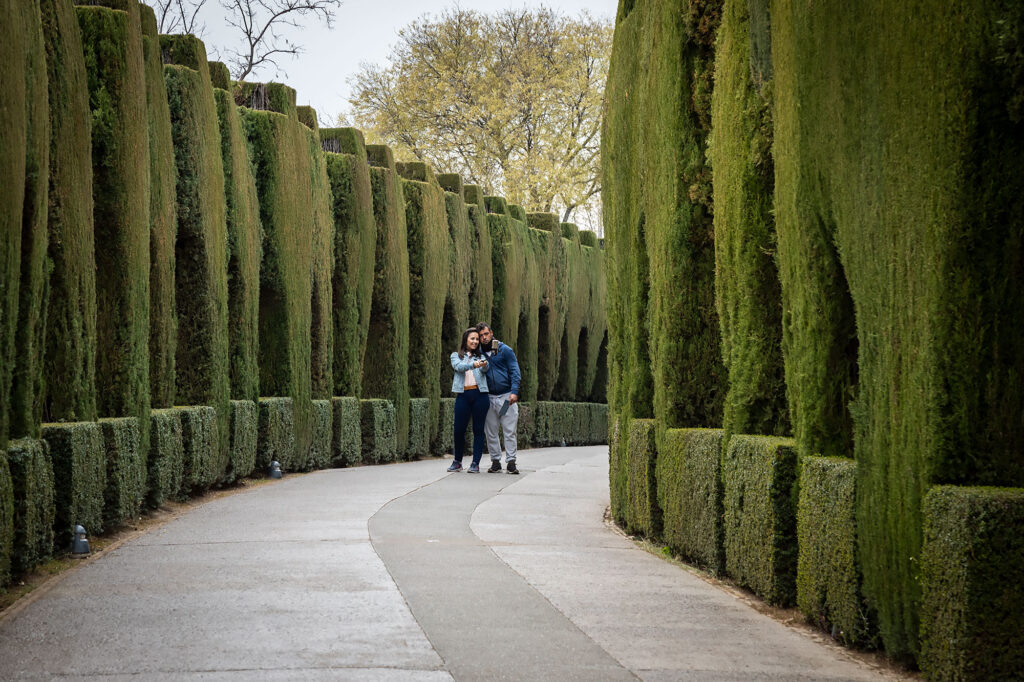
Generalife’s gardens
The Generalife is surrounded by an abundance of orchards and lush gardens that you can spend plenty of time walking around. From here there are beautiful views of other parts of the complex and the city.
Walk along the promenade with cypress trees and a water staircase, surrounded by laurel bushes. In the gardens there is also a newer amphitheater where performances are held in the summer.
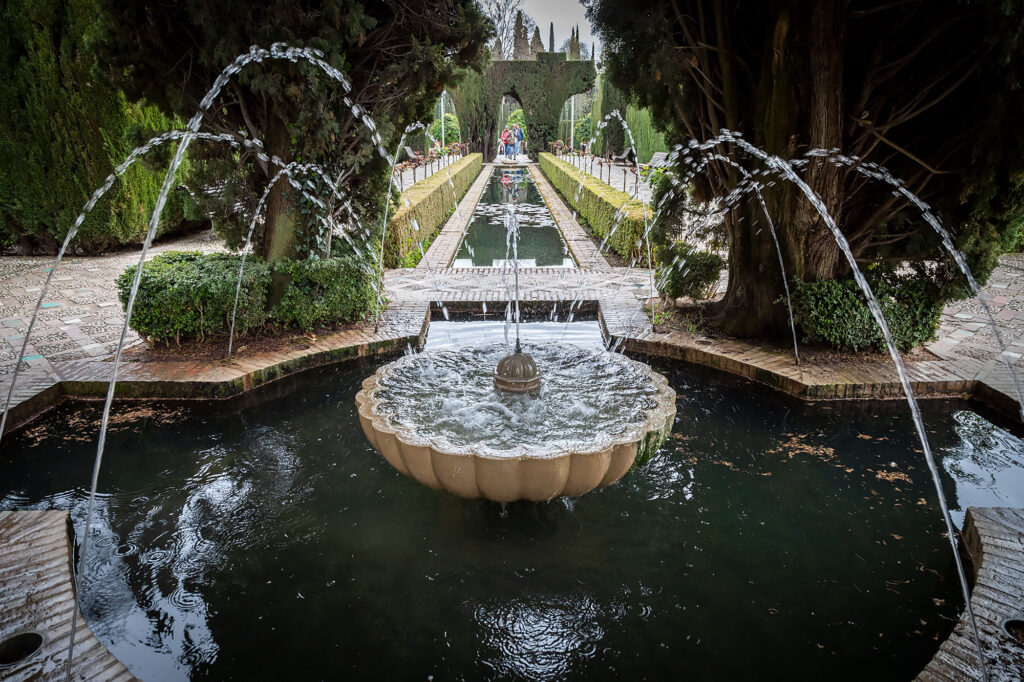
Photo: Christian Grønne
The gardens surrounding the Generalife prove that Moorish garden architecture is as mesmerizing as the buildings. There’s a wonderful mix of high and low gardens that are either symmetrical and simple, with plenty of straight paths and fountains, or intricate labyrinths surrounded by tall and dense shrubs and trees.
 Carlos V’s palace
The Carlos V Palace is not part of the original Alhambra and was only built between 1527 and 1957. The palace was commissioned by the emperor who needed a place to stay with his family.
The palace was many years in the making due to lack of funds and construction problems along the way.
The most impressive part of the Renaissance building is the circular courtyard with 32 Doric columns that have a diameter of 30 meters.
Today, the Carlos V Palace houses the Alhambra Museum and the Museo de Bellas Artes.
Alcazaba
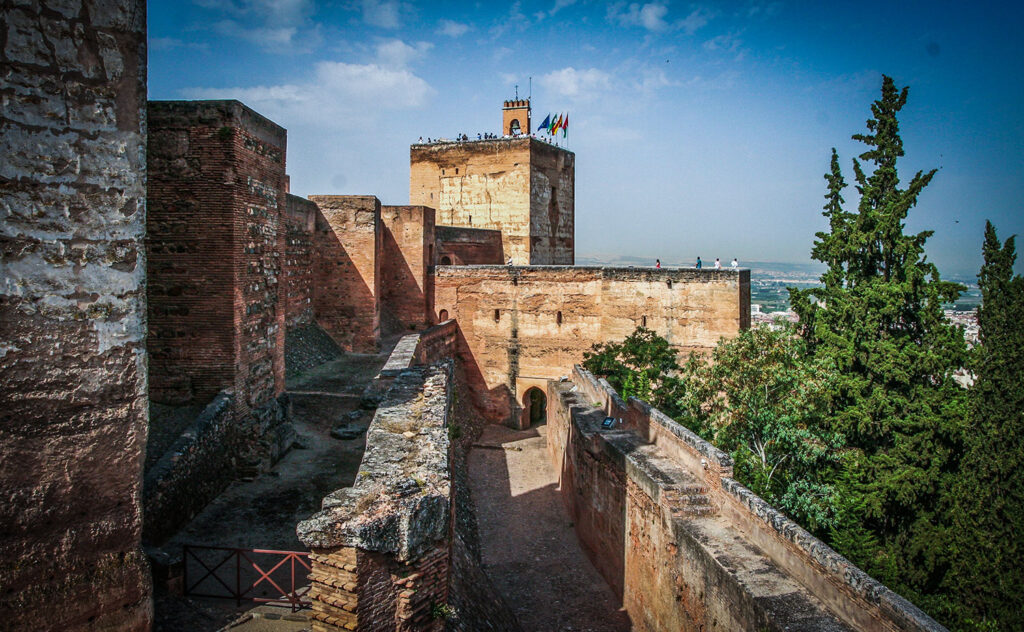
The Alcazaba dates back to the 800s and is the oldest part of the Alhambra. The fortress was intended to protect against external attacks and was a symbol of power.
The Alcazaba was also the place at the Alhambra in Granada where treasures were stored and the last bastion where the Christians met resistance during the conquest.
In addition, the Alcazaba, with its enormous walls, provided protection for the Sultan, allowing him to live safely in his own luxurious miniature city.
The Alcazaba was expanded after the Christians took over the fortress, and for a time it served as a prison.
How to buy tickets to Alhambra Granada
Only a limited number of visitors are admitted to the Alhambra each day and tickets are sold out months in advance. Therefore, you need to buy your ticket in advance.
There are many different providers selling tickets to the Alhambra. Unfortunately, there are also some that scam people. Buy your ticket on the official Alhambra website.
If the website is sold out, you can also check for Alhambra tickets on GetYourGuide (promotional link). I’ve bought tickets there several times and they are reliable.
Please note that on many websites you can read that there are a number of tickets for sale at the Alhambra ticket office daily. This arrangement no longer exists, so don’t be misled. You must have purchased your ticket online before you arrive.
Alhambra, C. Real de la Alhambra, s/n
More travel tips for Granada and Andalusia
If you want to experience much more in Granada than the Alhambra, read the guide to Granada
Looking for great tapas bars, restaurants, cafes and ice cream, read the guide to great places to eat in Granada.
For more cultural experiences in Andalusia, visit the historic and culturally rich city of Córdoba with its famous mosque-cathedral. You’ll find tips in the guide to Córdoba and tips in the guide to places to eat in Córdoba.