Recinte Modernista de Sant Pau is not only one of the city’s most beautiful examples of Catalan modernist architecture, it is also a story of a time when a hospital stay was completely different for patients. Take a look inside the renovated hospital, now a museum.
This article was updated in March 2026, originally published in June 2022.
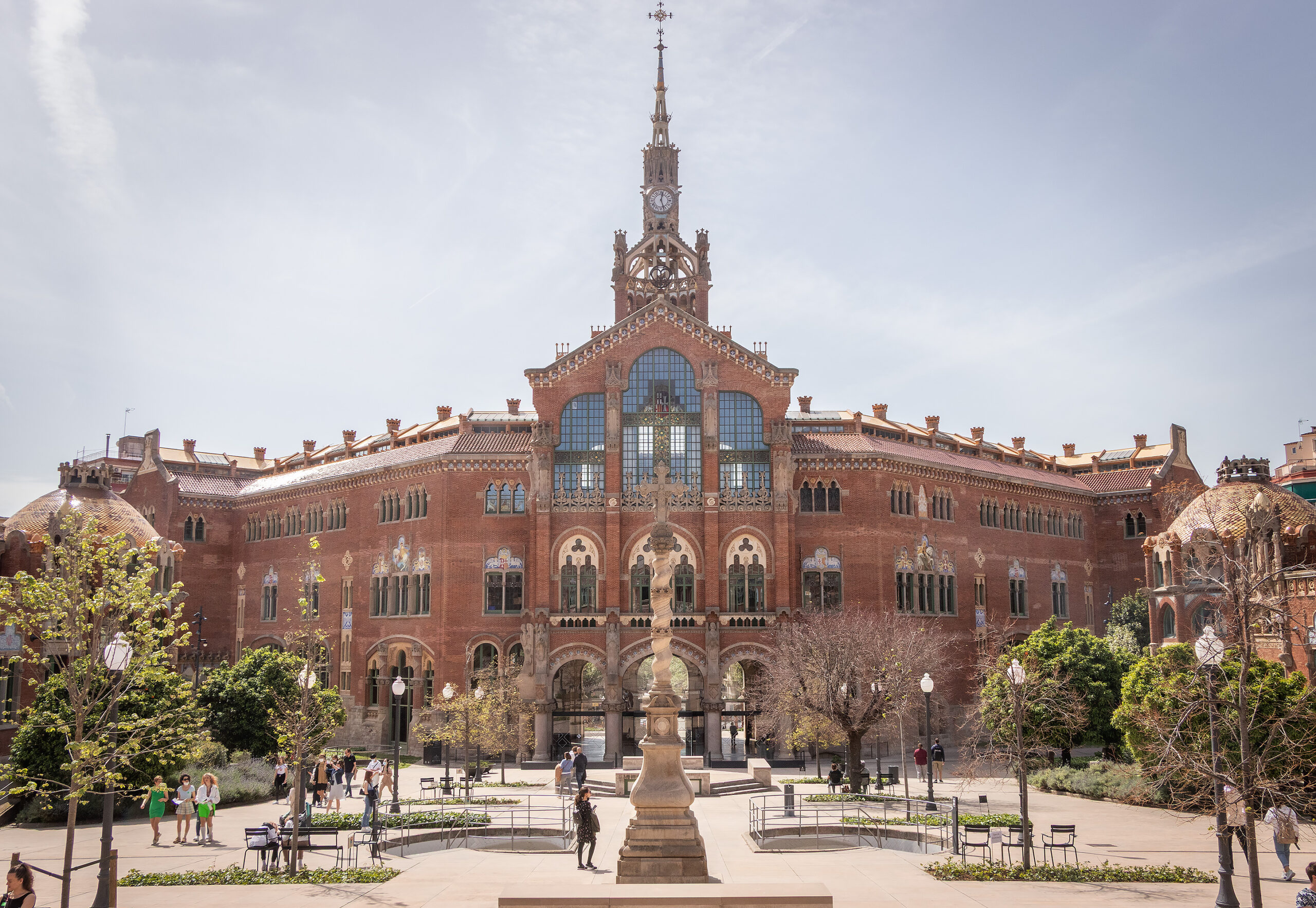
Standing at the bottom of the stairs in front of Sant Pau Hospital’s main entrance, you are already gripped by enormous humility. Located in Barcelona’s El Guinardó neighborhood, the majestic hospital is an extraordinary architectural work.
Although the building is close to Gaudí’s famous La Sagrada Familia, it receives far fewer tourists. This is despite it being one of the most beautiful modernist buildings in Catalonia. It was also here that Gaudí breathed his last after being hit by a tram.
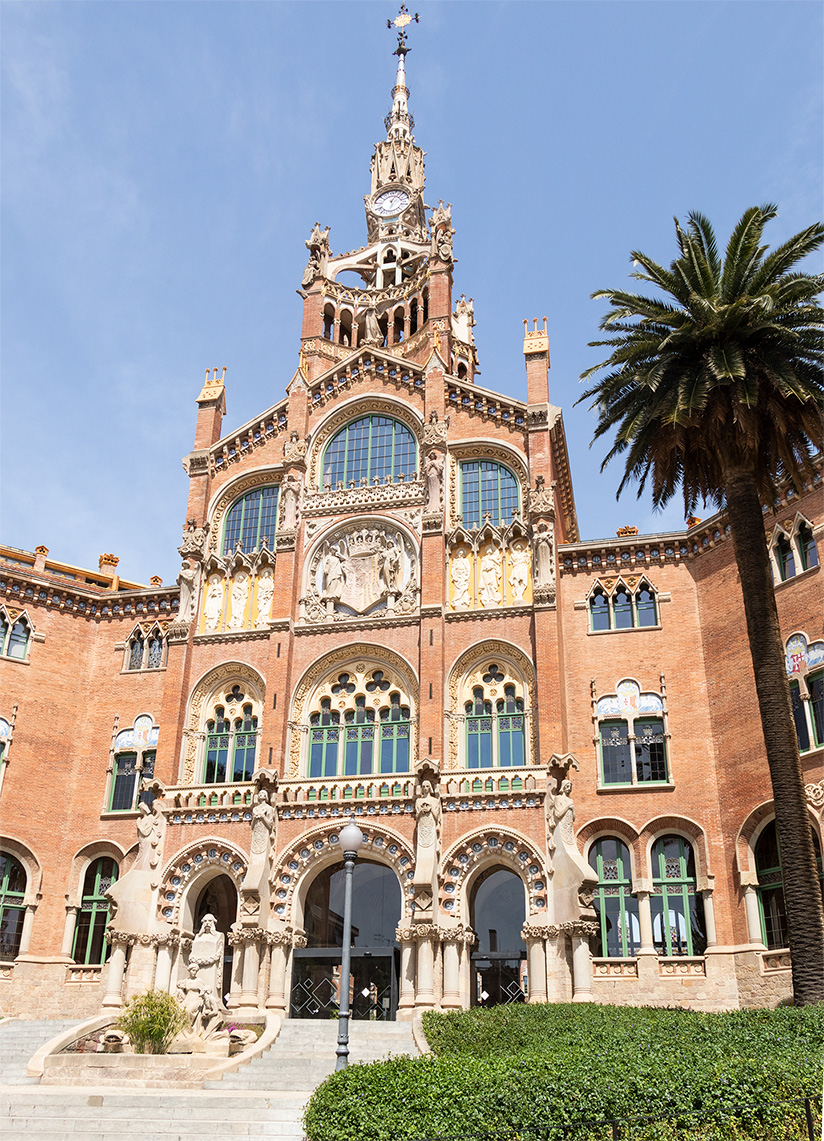 Sant Pau Recinte Modernista was built between 1902 and 1930 by Catalan architect Lluís Domènech i Montaner (1849-1923). He is considered one of the most important architects of Catalan modernism. He also built the Palau de la Musica concert hall. The project was financed by banker Pau Gil.
The new Sant Pau Hospital was to replace the former Santa Creu in Santa Pau, located in the Raval district, which had become too small as the population grew and medical advances were rapid.
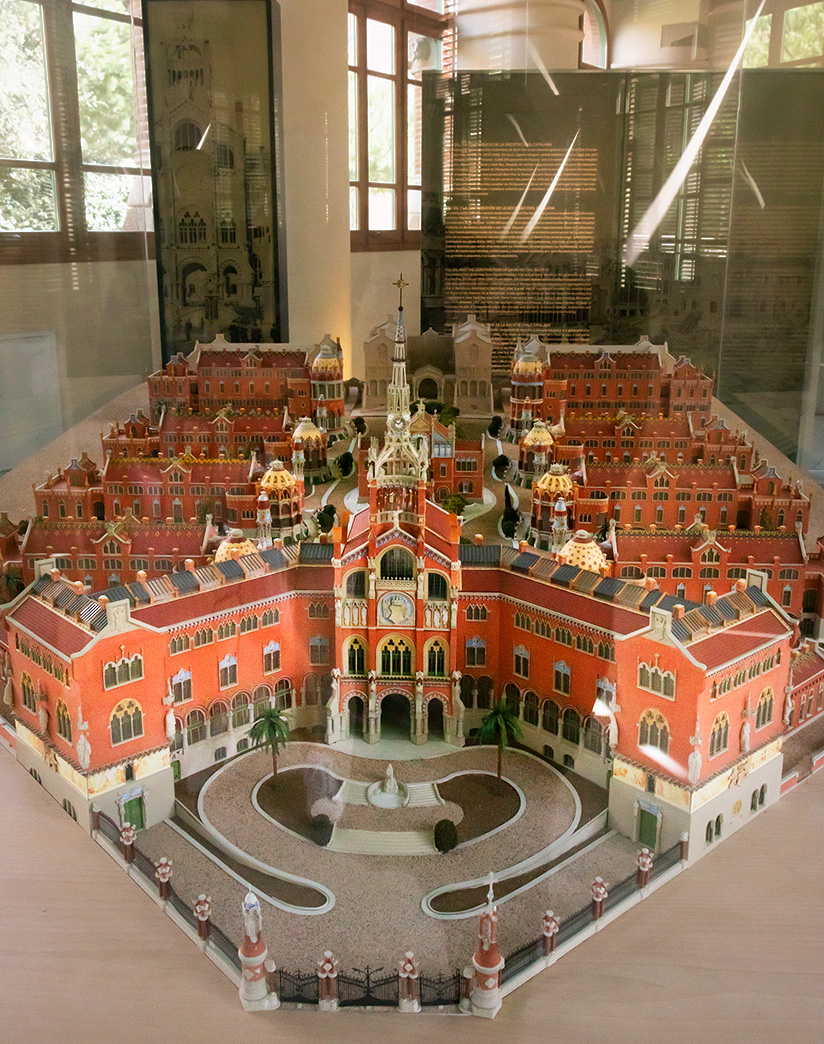
The world’s largest modernist complex
Behind the main building is an entire city within the city, and as well as being Domènech i Montaner’s most important work, Sant Pau is also the largest modernist complex in the world. The complex consists of the main building and 12 pavilions surrounded by greenery and connected by underground passages.
In 1997, Sant Pau was listed as a UNESCO World Heritage Site due to its unique architectural and artistic beauty. In 2009, the functioning hospital moved to newer buildings behind the old complex.
Today, the old San Pau Hospital serves as a museum, allowing the public to admire the work.
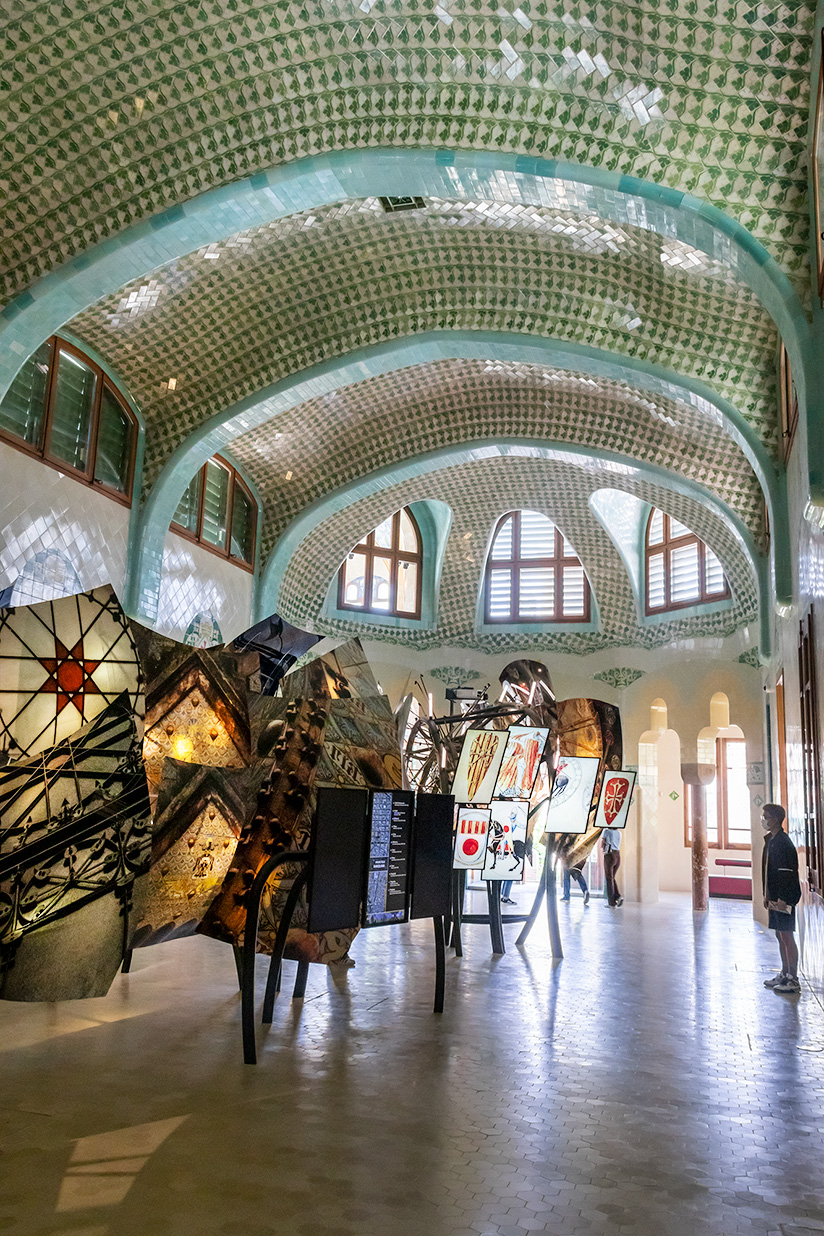 Historical tour of the hospital and its architecture
A visit to the Sant Pau Museum Hospital begins underground, in the Hypostyle Hall that once housed the emergency rooms. Black and white photographs of the old operating theatres are projected onto the walls to give an insight into what the examination rooms looked like.
The tour continues up to the Sant Salvador Pavilion, which is on two floors and also serves as an exhibition space. Here you can learn about the history of Sant Pau and its importance to the locals, including through exhibits of objects used in the hospital throughout history.
In another room, you can gain insight into the ideology of modernist architects and Domènech in Montaner’s work.
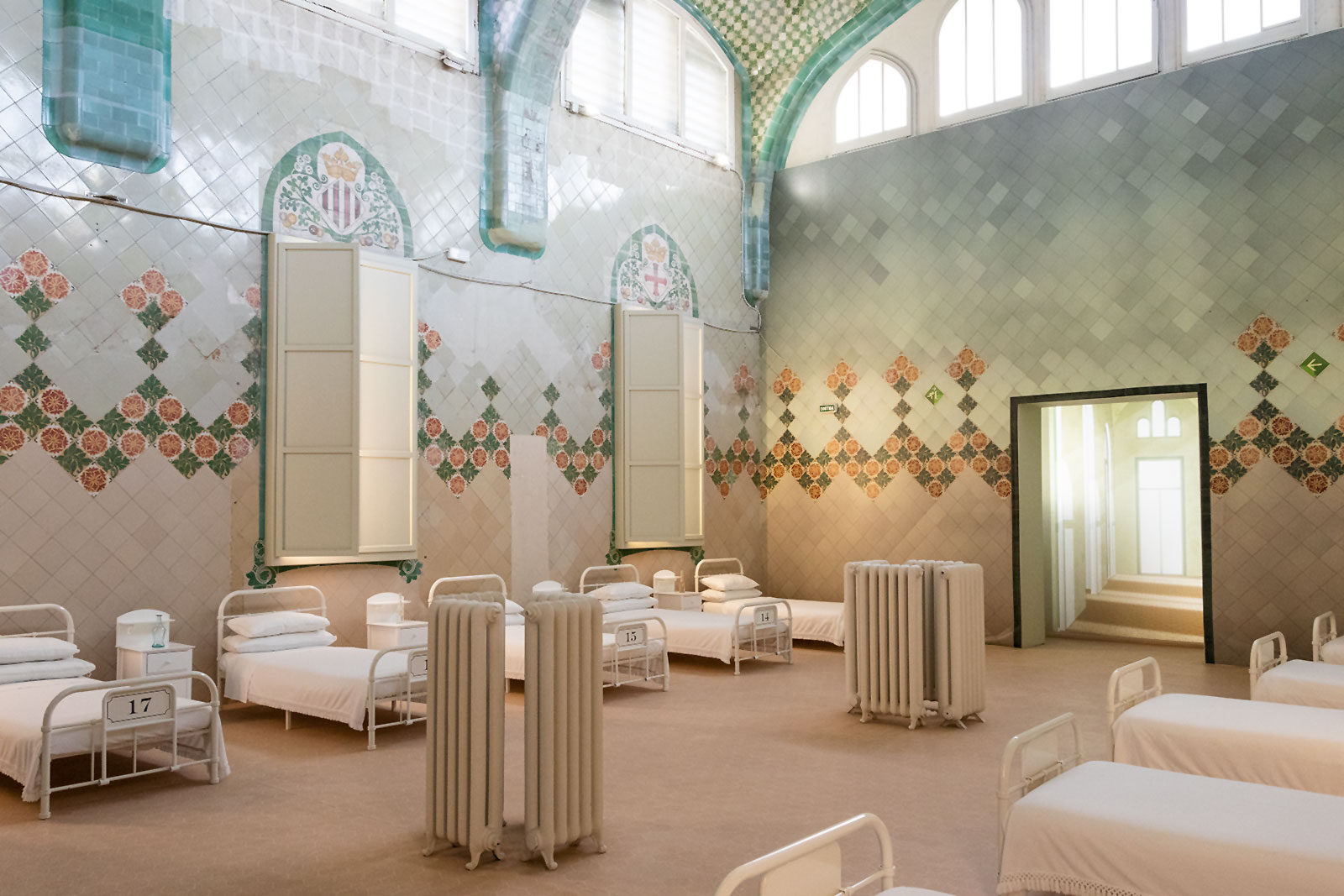
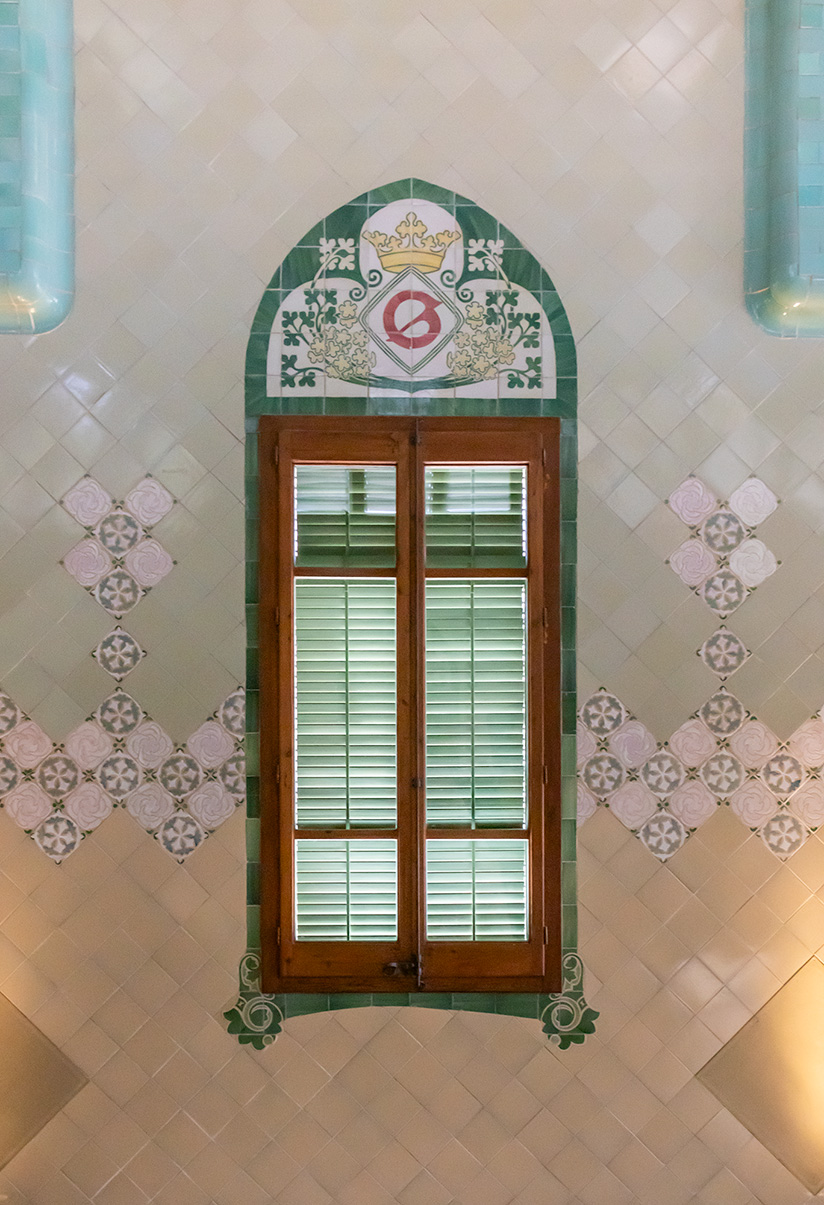 The room is decorated with vaulted ceilings with turquoise and aqua blue tiles in a fine geometric pattern. The walls have white tiles and decorations in delicate teal and beige colors that are a work of art in themselves. I spent a long time studying the beautiful tile work that is the hallmark of Catalan Modernism.
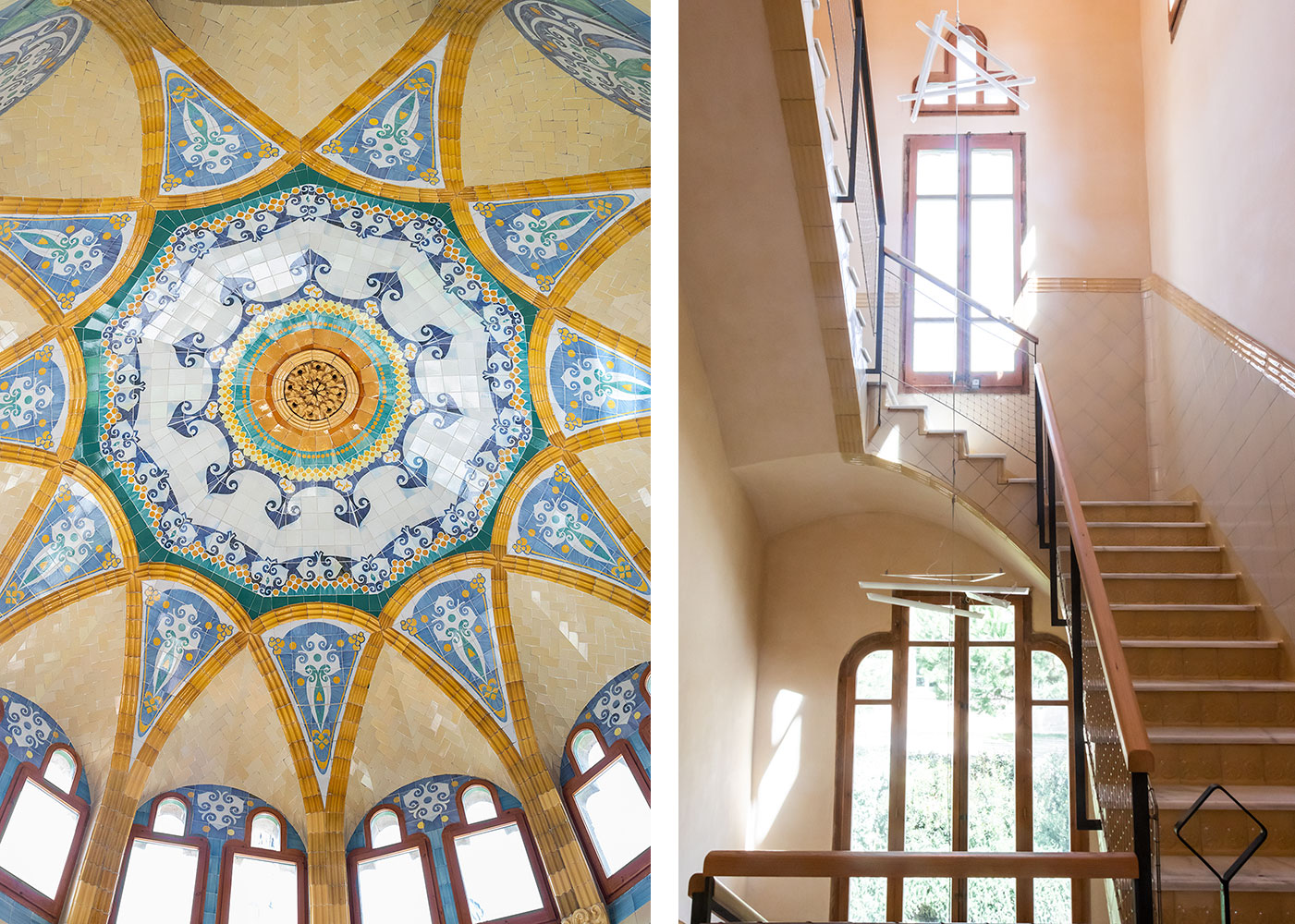 Notice the staircases between floors with fantastic shapes and embellishments. Also look up at the ceilings in the building’s nooks, which have stunning ornate tiling, and at the windows and doors, which are made of solid wood in curved shapes.
 Lush green spaces for healing body and soul
The tour continues in the hospital’s lush gardens, surrounded by pavilions built with inspiration from the forms of nature. There are lots of lights, plants, flowers, herbs and trees and several cosy corners.
The gardens and surrounding pavilions are a beautiful example of how nature and architecture can come together. And how nature played a significant role in healing the sick.
Patient in beautiful surroundings
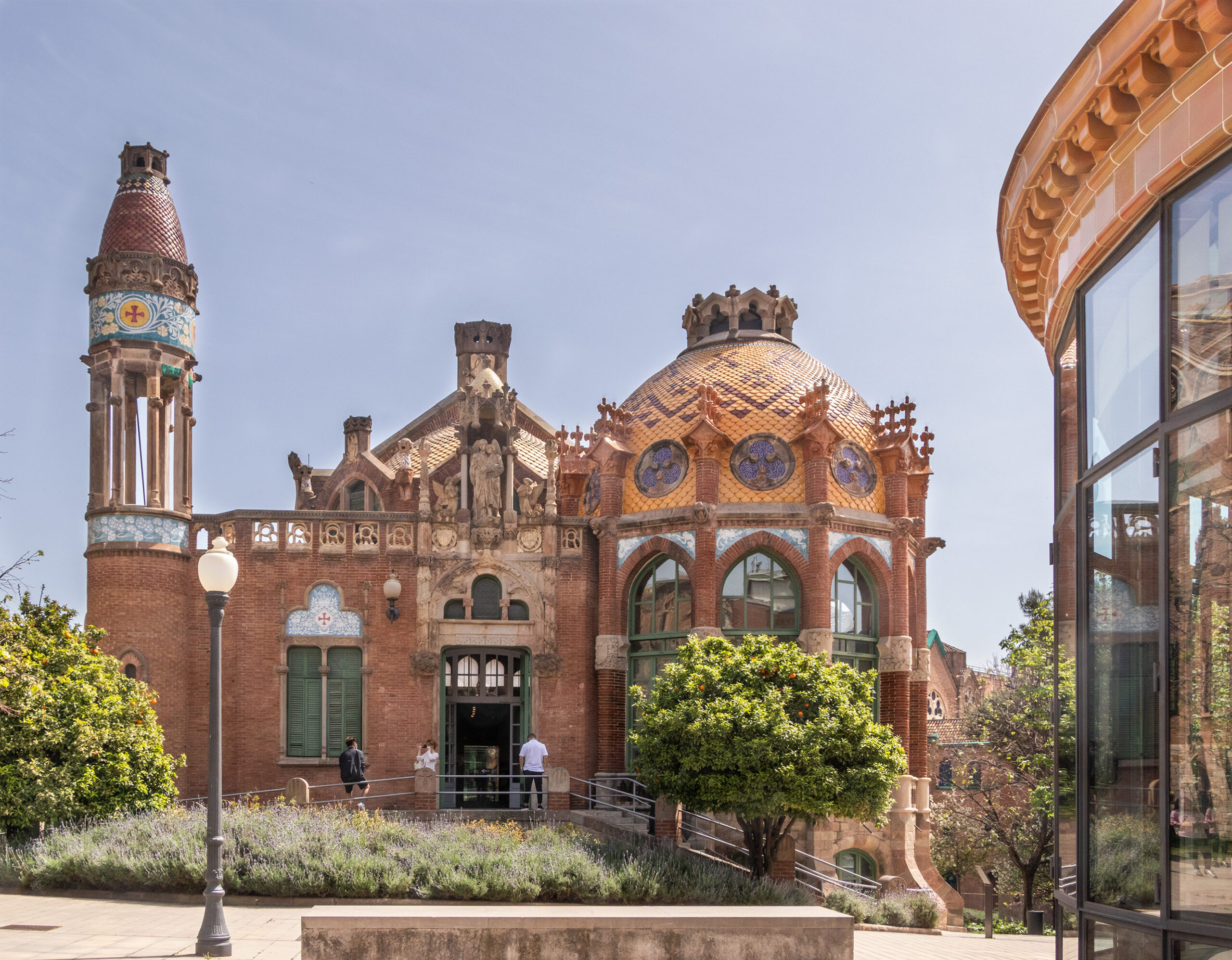
In the pavilions, which have towers and domed roofs with colorful mosaics, you can get an insight into how the hospital wards were decorated. You’ll also gain insight into the relationship between patient and doctor in the 1920s.
The most beautiful – and surprising – is definitely the San Rafael Pavilion. It is a reconstruction of an old patient room with soft and cozy lighting. Beautiful floral tile decorations adorn the cream-colored tile walls.
The atmosphere in the ward is very different to that of modern hospitals today, and it’s food for thought. Why don’t we build hospitals where the wards are beautiful and cosy any more?
The pavilion also has a nice and beautiful domed garden room where patients could sit and look out at the greenery through the large windows.
In the surgery pavilion you will get an insight into the medical work during this period.
Not all pavilions and the entire main building are accessible to the public. Parts of the complex serve as offices and workplaces for organizations working with innovation, sustainability, health, education and culture.
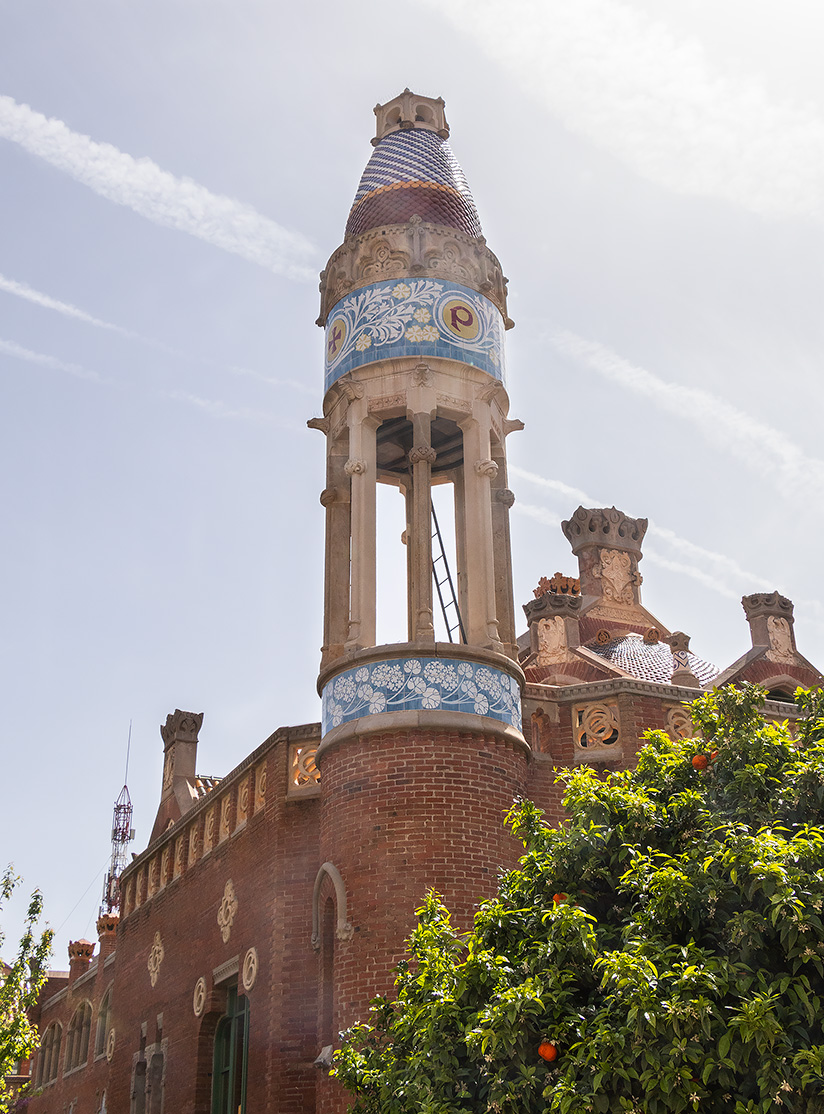
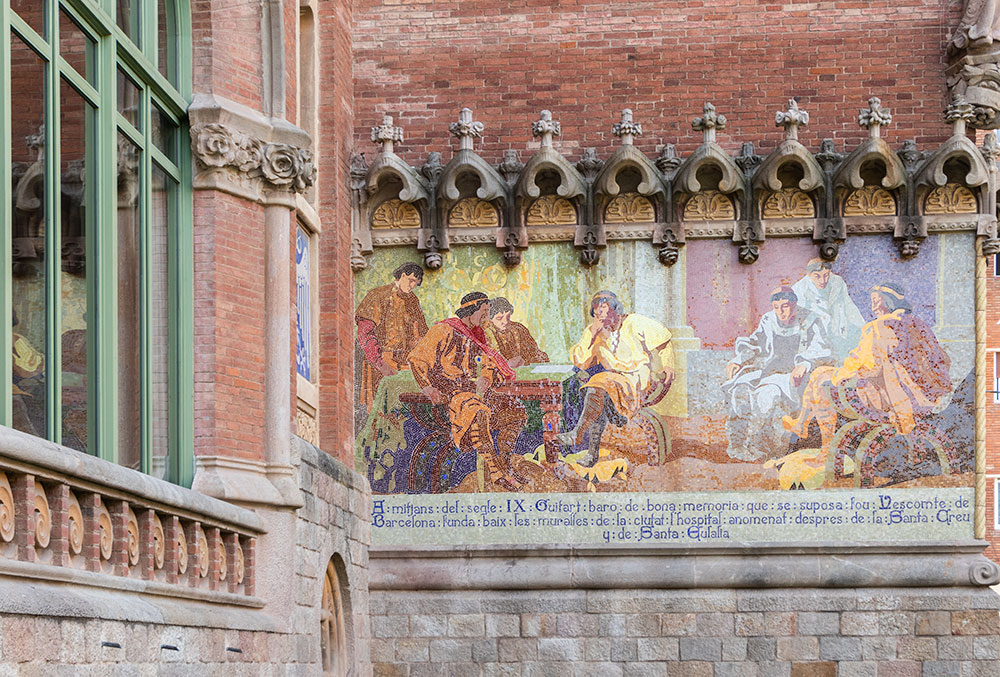
The tour ends in the main building, where Montaner’s inspiration from the Mudejar style is conspicuous. A style that the modernist architects were all inspired by. The main building houses a library and a church, among other things, and here you can also feel how modernism’s sense of light, colours, columns and decorations blend into one.
Buy your ticket for Sant Pau Recinte Modernista
During holidays, there may be a queue at the ticket office. Skip the line and buy your ticket to Sant Pau Recinte Modernista on the website. Both guided tours and self-guided visits are available.
Sant Pau Recinte Modernista, Carrer de Sant Antoni Maria Claret 167
More travel inspiration for Barcelona
If you’re visiting Barcelona for the first time, read the guide to Barcelona for beginners. Also check out the guide to different experiences in Barcelona. If you like the local vibe, check out the guide to Barcelona’s Poblenou neighborhood.
Find a great place to stay in the guide to boutique hotels in Barcelona.
For dining tips, check out the guides to vegetarian restaurants in Barcelona, Barcelona’s best tapas bars and great restaurants in Barcelona.
If you fancy a trip out of town, check out the guide to the best day trips from Barcelona.