In Málaga you can enjoy a city break with great cultural experiences, charming squares, streets and beaches. Málaga is especially known for the Picasso Museum and the artist’s birthplace, as well as the modern port promenade. But there are many more exciting experiences waiting for you in the Andalusian city.
1 Picasso’s birthplace
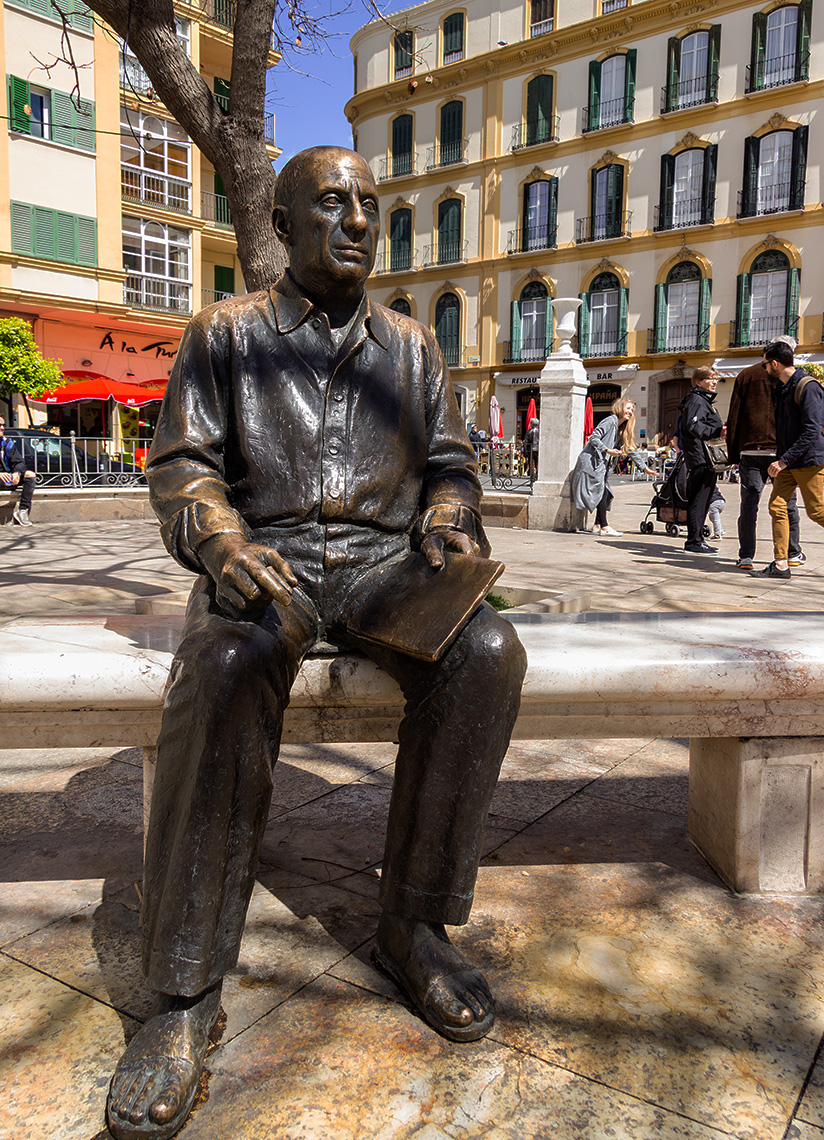
Pablo Ruiz Picasso (1881-1973) is impossible to miss when visiting Málaga. In Plaza de la Merced you’ll find a bronze sculpture of the world-famous artist. He is sitting on a bench looking out over the square.
On the corner behind the sculpture (in no. 15) is the house where Picasso was born in 1881. He lived here until 1884, when he moved with his family to La Coruna.
Picasso’s birthplace is now a museum, and here you can see a selection of the artist’s works, including ceramics, lithographs and sketches, as well as some of his and his family’s possessions. The museum provides an insight into Picasso’s family, the artist’s roots and his early association with Málaga.
In the building opposite (no. 13) you can see more of his art and works related to his life.
Fundación Picasso, Plaza de la Merced 15
2 The famous Picasso Museum
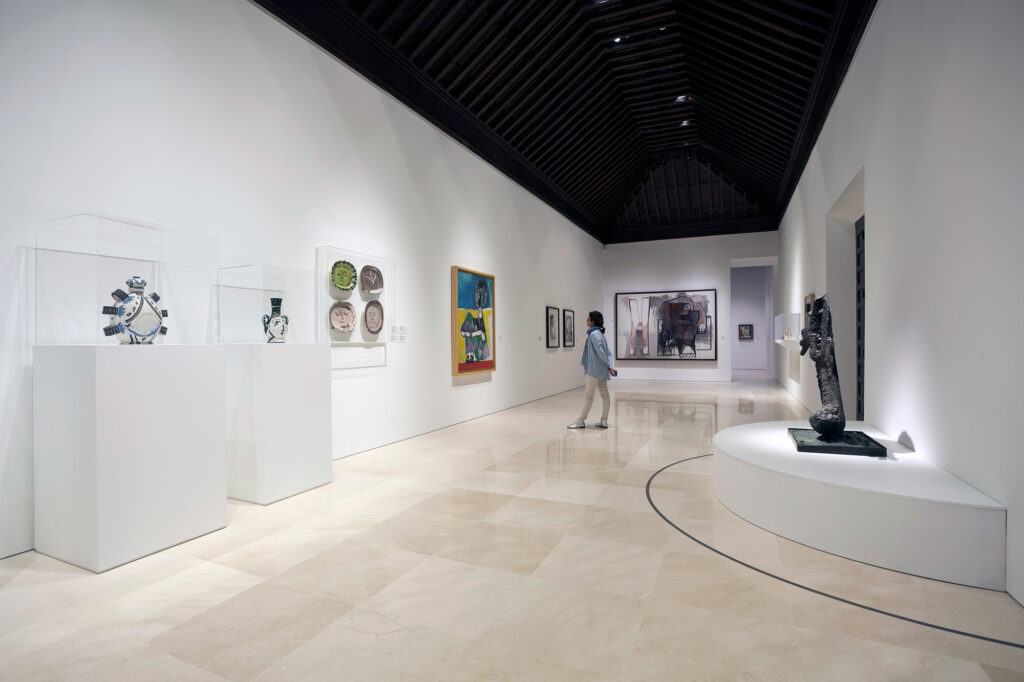
The Picasso Museum is set in a beautiful 16th-century palace in the centre of Malaga. The museum was inaugurated in 2003 and many of the works have been donated by Picasso’s daughter-in-law, Christine, and grandson, Bernard.
The museum is run by the Picasso Foundation. You can explore 233 works spanning 80 years of artistic work, from Picasso’s time as an art student at the Academy through the Cubism period to his late work.
Key works include Mother and Child, The Three Beauties (with wife Olga Khokhlova), Face of a Woman, Jacqueline in a Straw Hat, Child with a Shovel and Fruit Bowl
The Picasso Museum also has ongoing exhibitions that focus on a particular period in the artist’s career or a theme.
Museo Picasso Málaga, Palacio de Buenavista
3 Málaga’s impressive fortifications
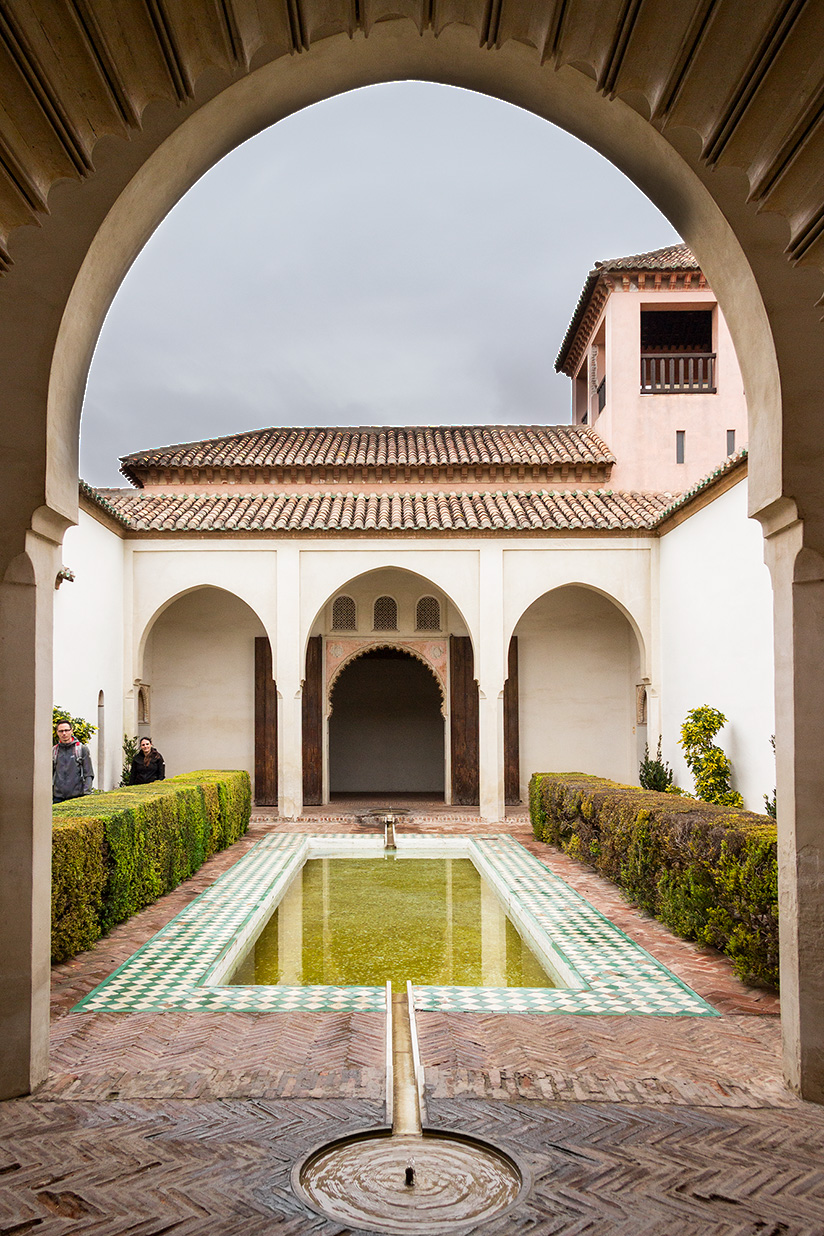
At the top of Málaga stands the ancient fortress of Alcazaba, one of the most important in Spain. The Alcazaba is also one of Málaga’s main attractions.
From here you can enjoy fantastic views of the city and the bay. The Moorish fortress was built between 1057 and 1063 and is located at the foot of the Gibralfaro hill.
When Málaga was conquered by Muhammad II Ben al-Ahmar in 1279, the Alcazaba was renovated and given its distinctive Nasrid appearance. Architecturally, it is a mix of military fortification combined with aesthetic, distinctive Moorish courtyards. The courtyards have elongated terraces with pools, and the spaces beautifully combine light and shade.
You’ll have to walk up steep, cobbled paths to climb the fortress, but the tour of the spectacular fortress – and the views – are well worth the effort. Alternatively, you can get to the top by lift.
As you look from the fortress towards the Picasso Museum, to the right of the museum you can spot a mini version of the cube that covers the Centre Pompidou art museum (read more below). The roof terrace and cube belong to Málaga’s famous actor Antonio Banderas, of whom the locals are very proud.
Alcazaba Málaga, Calle Alcazabilla 2
 4 The Roman theater
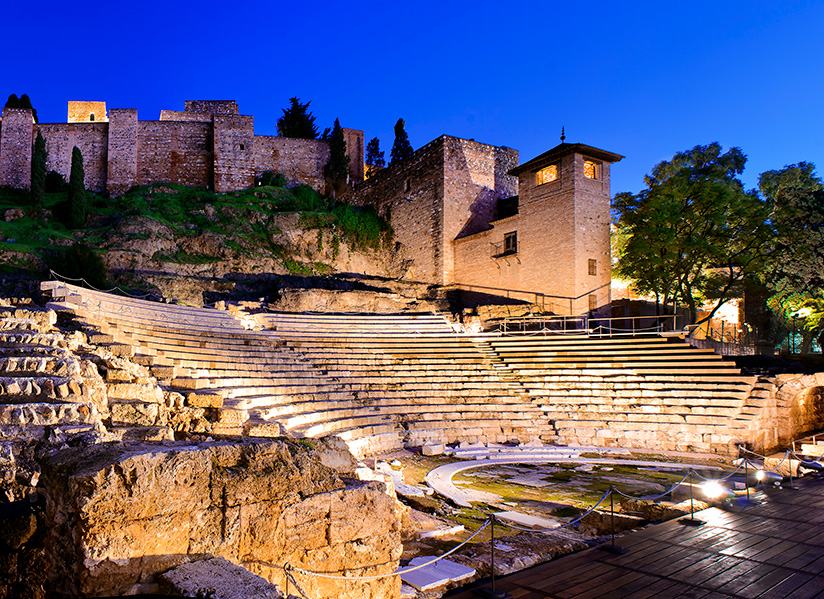
At the foot of the Alcazaba you’ll find the remains of the city’s Roman amphitheatre, built in 100 BC. Kr and used until the year 300 E.kr. Later, the Moors used it as a quarry, excavating stone to build the Alcazaba. The ruins of the theatre were only rediscovered in 1951, and since 2011 it has been used for outdoor performances in the summer.
The theatre is the only one left in the city from Roman times, the rest disappeared when the city was bombed during the Civil War.Next to the theatre you will find a visitor centre with information about the history of the theatre and the excavations.
5 Málaga’s best viewpoint
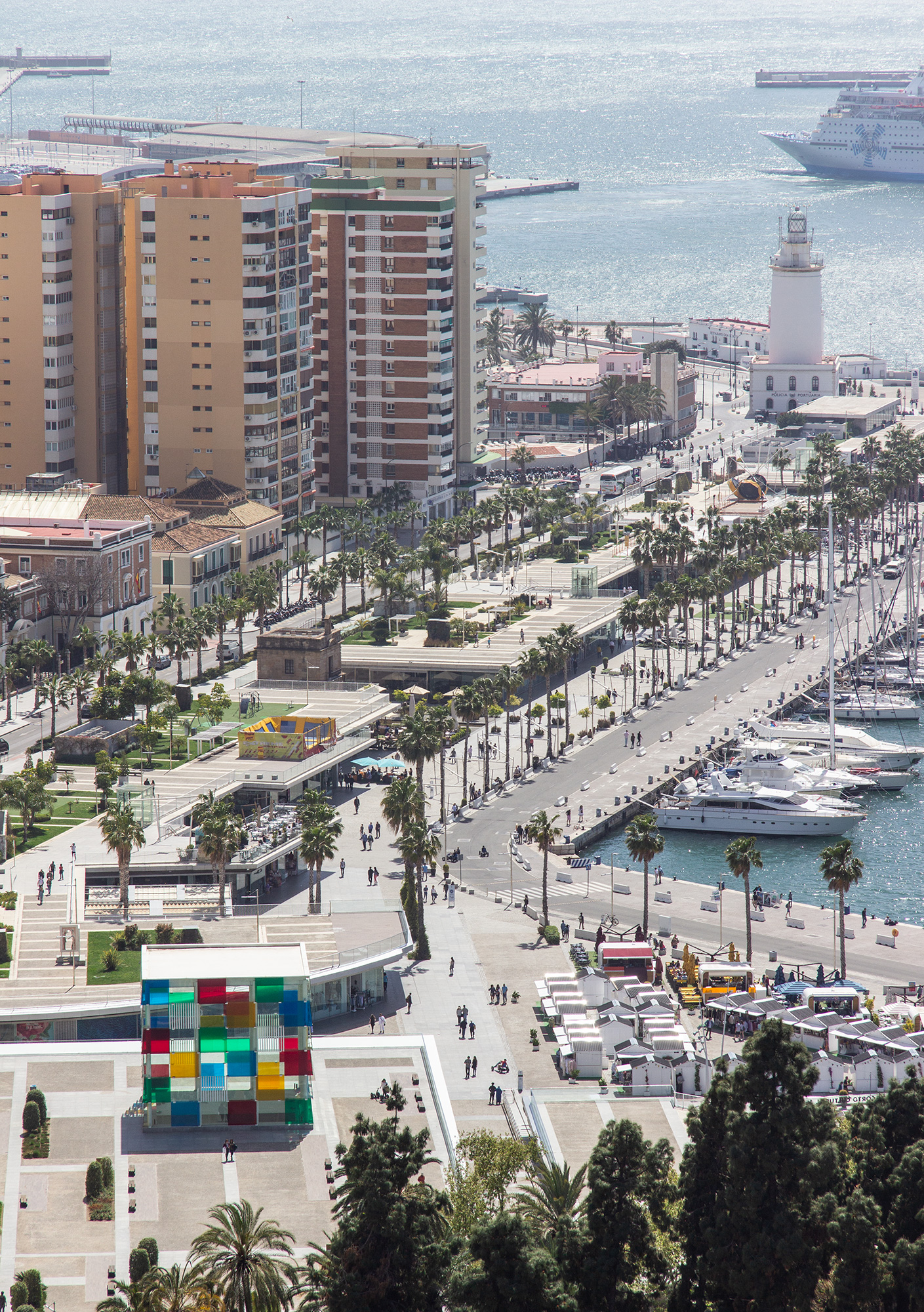
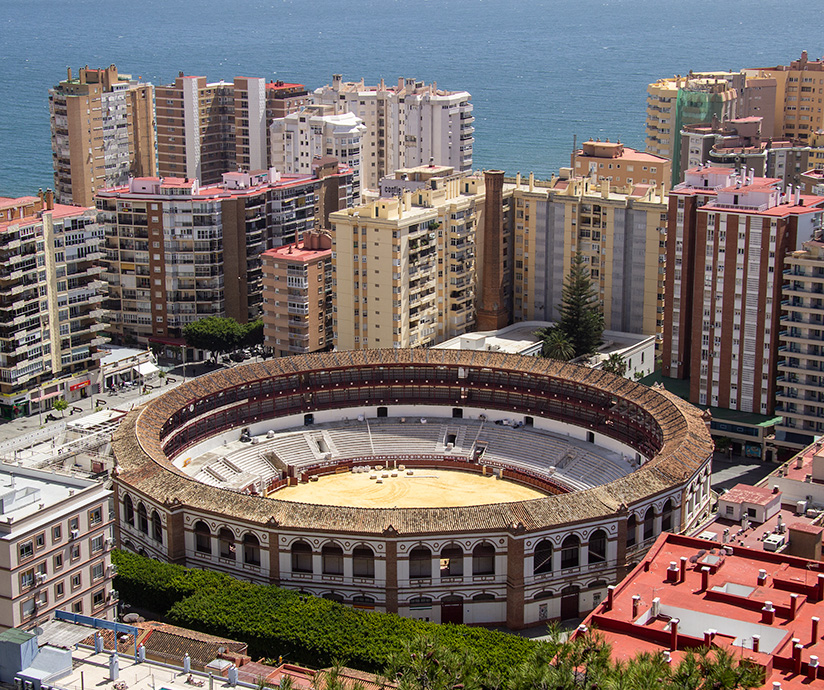
Málaga’s most enchanting viewpoint is located 130 metres above sea level on the Gibralfaro hill. Here you’ll get impressive views of the harbor and Málaga’s coast to the east, the cathedral and the city center. And you can look straight down into Málaga’s bullring.
The climb to the top is steep, but worth the effort. On the ascent through the Jardines de Puerta Oscura you are surrounded by beautiful flowering gardens.
If you don’t have the courage to go all the way to the top, the view can also be enjoyed on a more limited scale from a viewpoint further down the paths. Alternatively, you can take bus No 35 from Avenida de Cervantes.
Mirador de Gibralfaro, Calle Campos Elíseos 16
6 Stroll down the harbor promenade
The modern port area is a popular gathering point for both locals and tourists in Malaga, especially from late afternoon to late evening. Málaga’s port is over 3000 years old and Spain’s oldest. Today, the old fishing port is also Spain’s second largest cruise terminal.
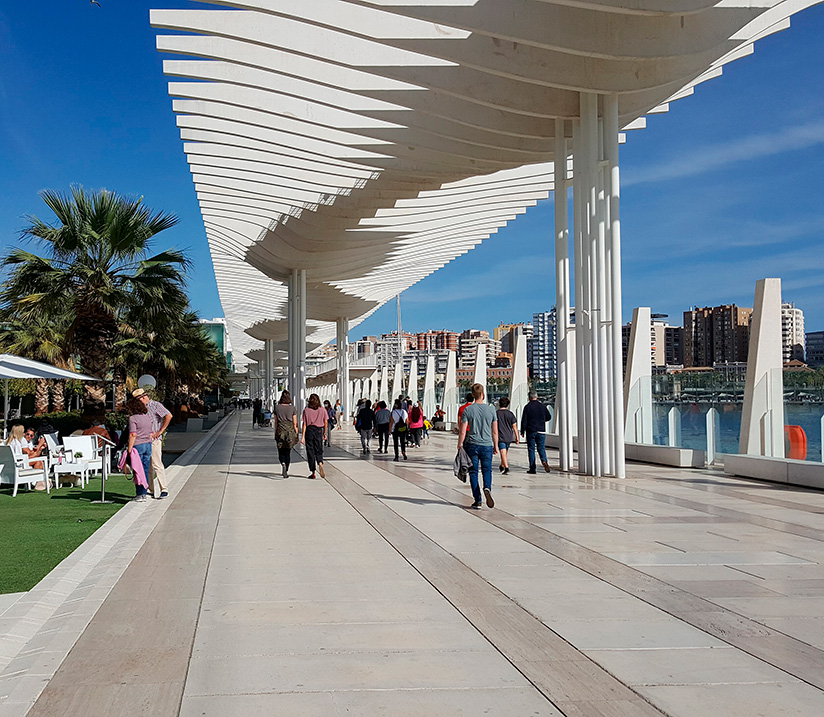
The port area is divided into two areas: Muelle Uno and Dos. Start from Muelle Dos, which begins at Plaza de la Marina. Here you can stroll along the promenade, Palmeral de las Sorpresas, covered by a giant white wooden structure that acts as an umbrella to shield you from the strong sun. The promenade is surrounded by 400 palm trees.
The promenade turns into Muelle Uno, where cafés, bars and restaurants are lined up like pearls on a string. Here you can stop and enjoy a drink or a meal overlooking the yachts and charming maritime crowds.
 7 See modern art under the checkered cube
In the middle of Muello Uno and Dos, a coloured cube shoots up from the ground. Although the cube attracts a lot of attention, it’s not immediately obvious that underneath it lies the underground art museum Centre Pompidou.
The museum opened in 2013 and is the first Centre Pompidou to open outside France.
The permanent collection is divided into five themes and features works from the Paris collection, including Spanish painters Joan Miró, Pablo Picasso, Antoni Tàpies. You can also see works by international artists such as Francis Bacon, Frida Kahlo, Marc Chagall, Max Ernst and Alberto Giacometti. The museum also has changing exhibitions exploring photography, video, architecture and design.
Created by architects Javier Pérez De La Fuente and Juan Antonio Marín Malavéi, the cube is a masterpiece in its own right.
The sun’s rays shine through the transparent surfaces of the cube, reflecting the colours in very different ways indoors and outdoors, depending on where the sun is in the sky.
Centre Pompidou Málaga, Pasaje Doctor Carrillo Casaux, s/n
 8 Málaga’s lush shady park
When you’re in the port area, I recommend seeking shelter from the hot Málaga sun in the city’s beautiful Alameda Park, also known locally as Málaga Park.
The 30,000 square meter park runs between Alameda Principal and Paseo de España, and is one of the attractions in Málaga that even children love.
The beautiful park contains an impressive collection of tropical and subtropical plants, considered one of the most important in Europe. Here I enjoy sitting on a bench and relaxing with a book among shady cypress and orange trees. Especially in spring and summer, when the park and its rose garden are in full bloom, it’s beautiful.
In addition to plants and trees, the park also has play areas, walkways, beautiful squares with Andalusian tiles, sculptures and fountains.
9 Drinks for the sunset over Málaga harbor
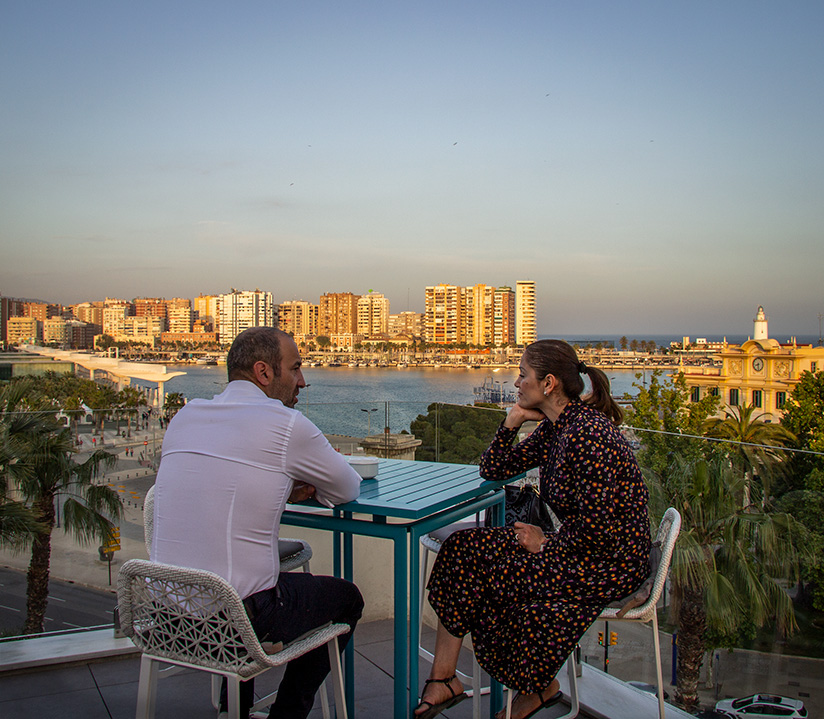
Located in Málaga’s Soho district, the Room Mate Valeria hotel has a fantastic rooftop terrace. You can visit the rooftop terrace even if you are not a guest at the hotel.
Enjoy a drink on top of Málaga at sunset. The rooftop terrace offers great views of the port area, the sea and the old city center of Málaga with the fortress in the background. And the drinks here are really good.
Room Mate Valeria, Plaza Poeta Alfonso Canales 5
Powered by GetYourGuide
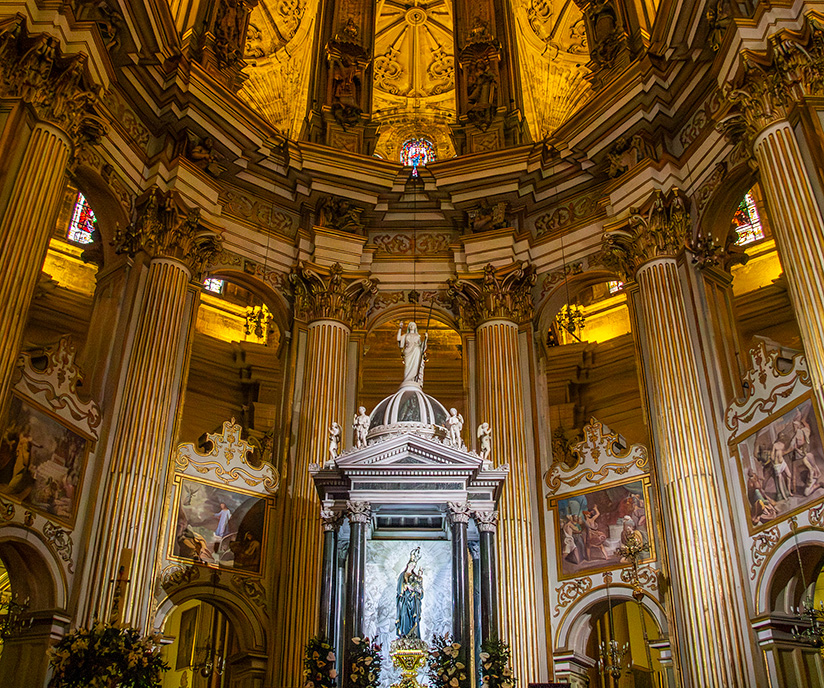
10 Málaga’s one-armed cathedral
Málaga’s cathedral is one of the most impressive in southern Spain, and like the one in Granada, it too stands unfinished. The cathedral is located in the city centre, close to the site of a former moor. Built between 1528 and 1782, it is in Renaissance and Baroque style and its full name is Nuestra Señora de la Encarnación (Our Lady of the Incarnation).
During the construction process, the coffers became empty and the planned two towers could not be built. The eastern tower was never built, hence Malaga Cathedral’s nickname La Manquita (the one-armed woman).
The remarkable cedar and mahogany choir is by Luis Ortiz. After his death, one of the most famous Spanish woodcarvers of the time, Pedro de Meno, created the 42 fine wooden figures that adorn the choir.
Also visit the cathedral’s beautiful gardens and climb the 200 steps to the top for great views.
Málaga Cathedral, Calle Molina Lario 9
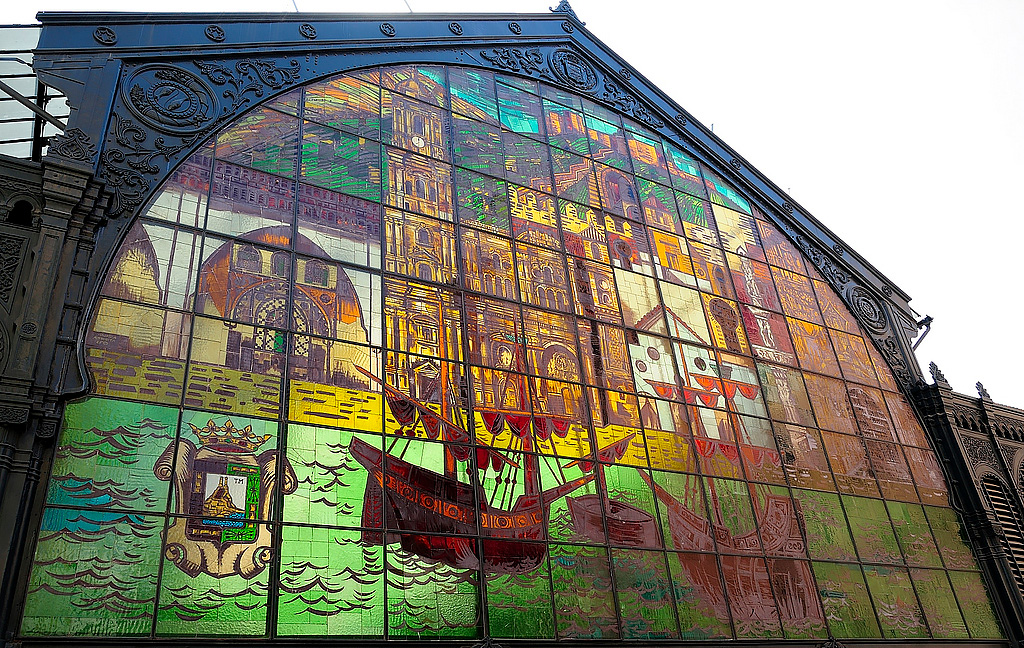
11 Beautiful food market with Andalusian produce
Brimming stalls selling fresh fruit and vegetables, cheeses, almonds and nuts, as well as fish and meat, tantalize the senses as you enter Malaga’s central market, Mercado Central de Atarazanas.
Here you’ll find everything your heart desires in the way of delicious Andalusian produce, and you’ll be tempted to buy in for the big dinner party. If you’re staying in a hotel where you can’t cook, you can shop for almonds, nuts and vacuum-packed ham and cheese to take home in your suitcase.
The exterior of the Mercado Central de Atarazanas is also breathtaking. Above the main entrance of the fine iron structure that covers the market, there is a beautiful glass mosaic, which was added during a major renovation from 2008 to 2010. The mosaic depicts the city’s various monuments.
The market is located in a building that was a shipyard about 600 years ago (atarazanas means shipyard). Back then, the water went right up to the market entrance. Later there was a monastery, a military hospital and a barracks before the market was opened in 1879.
At the main entrance there are several tapas bars where you can take a break and sample some of the fresh produce from the market.
Mercado Central de Atarazanas, Calle Atarazanas 10
 12 See street art in the Soho neighborhood
Malaga’s Soho district is a haven for street art lovers. Also known as Barrío de las artes, the neighborhood is full of street art. Works by world-famous artists such as D*Face, Obey, ROA and Pejac are among them.
The Soho district is located in an old residential area, which for many years was worn and half-empty, but in recent years it has become a hip and cultural melting pot.
This is partly due to the MAUS project – Málaga Arte Urbano Soho – which hired renowned street artists to revitalise the neighbourhood. In addition to international artists, many locals have also graced the walls with their street art.
Be sure to look up and down and into nooks and crannies, because street art is everywhere in the neighbourhood. Read more about street art in Soho.
 13 Shopping on Málaga’s main street
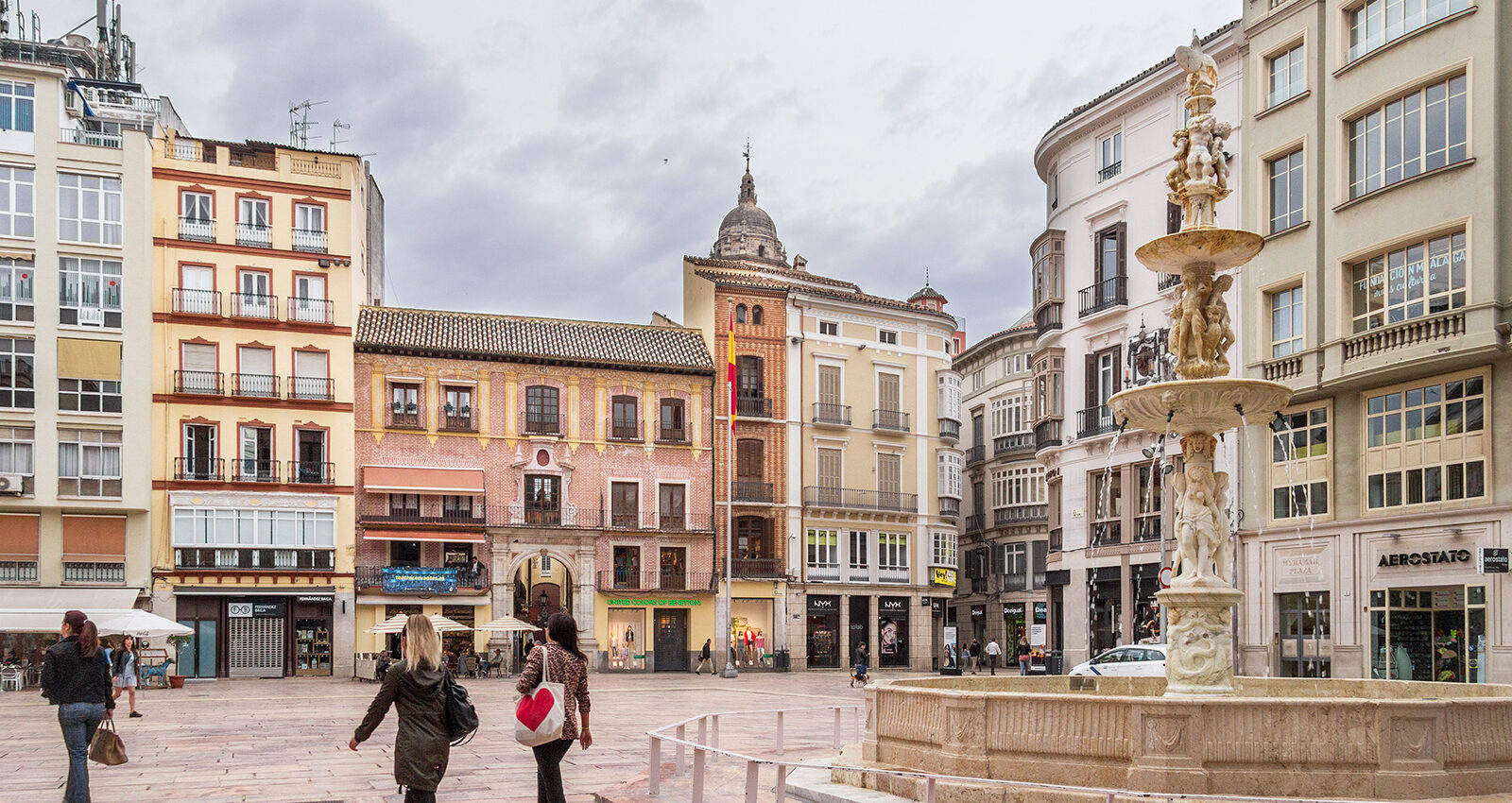
Málaga’s main street, Marqués de Larios, is the city’s most prominent street with the most expensive rent. The street runs between Plaza de la Constitución and the Alameda Principal boulevard. It is lined with beautiful architectural buildings, with shops on the ground floor, like pearls on a string.
The Marqués de Larios was inaugurated in 1891. You’ll find a statue of the Marques de Larios, who put money and name to the street, at the end of the street, at Alameda Principal, facing the harbor.
However, with the proclamation of the Second Republic in 1931, the street changed its name to Calle 14 de April, but after the Civil War it regained its original name.
After a major renovation in 2003, Marques de Lario became a pedestrian street, where you can zigzag between shops like Desigual, Mango Man, Bershka, Massimo Dutti, Swarovski and Victoria’s Secret. Take a look at the side streets, where there are also many shops.
Many of the city’s big events also take place at the Marques de Larois, fashion week and the annual film festival, where the red carpet rolls out onto the streets.
Christmas decorations in the street are also popular.
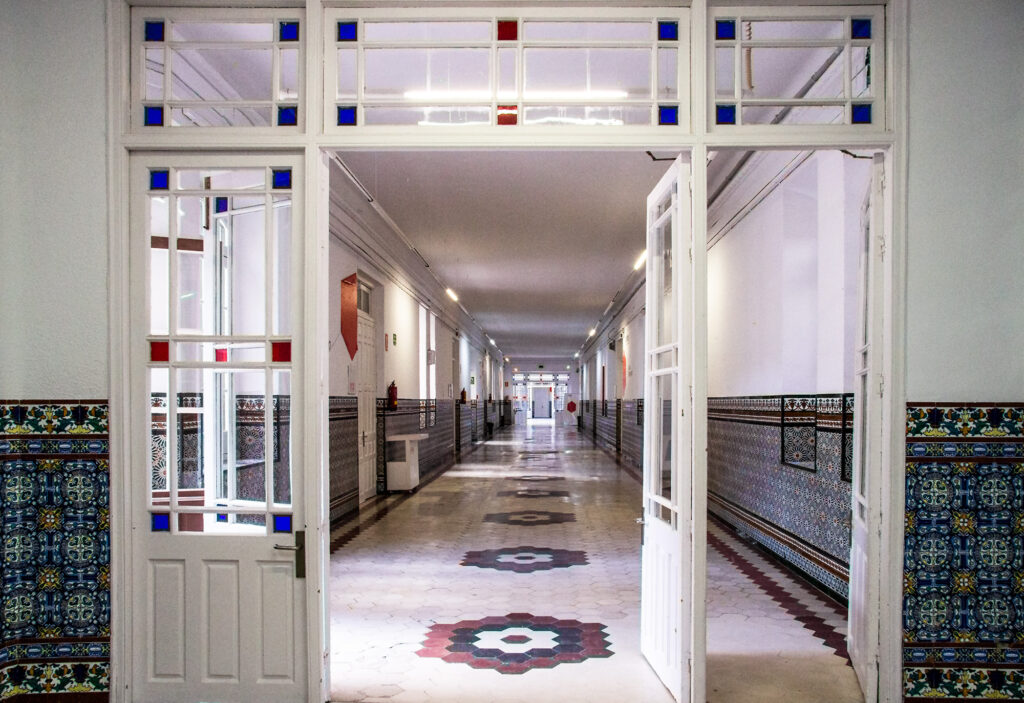
14 Art in the old hospital
La Térmica is a vibrant cultural center housed in an impressive modernista building. The building previously housed a military hospital, an orphanage and a community center.
Created by architect Juan Nepomuceno Ávila between 1907 and 1912, the 13,000 square metre building is worth a visit in itself. There are impressive tile mosaics on the walls and floors, simple and fine glass decorations, and charming courtyards and fountains.
The cultural center, La Térmica, opened in 2013 and is where locals can develop creative ideas. It also hosts interesting art, design and architecture exhibitions, theater performances, film screenings, concerts, workshops and lectures. The world-famous street artist, Banksy, has exhibited here.
La Térmica also has a large common room with soft sofas, work areas, free Wi-Fi and vending machines with drinks that visitors can also use.
Check the current cultural programme on the website.
La Térmica, Av. de los Guindos 48
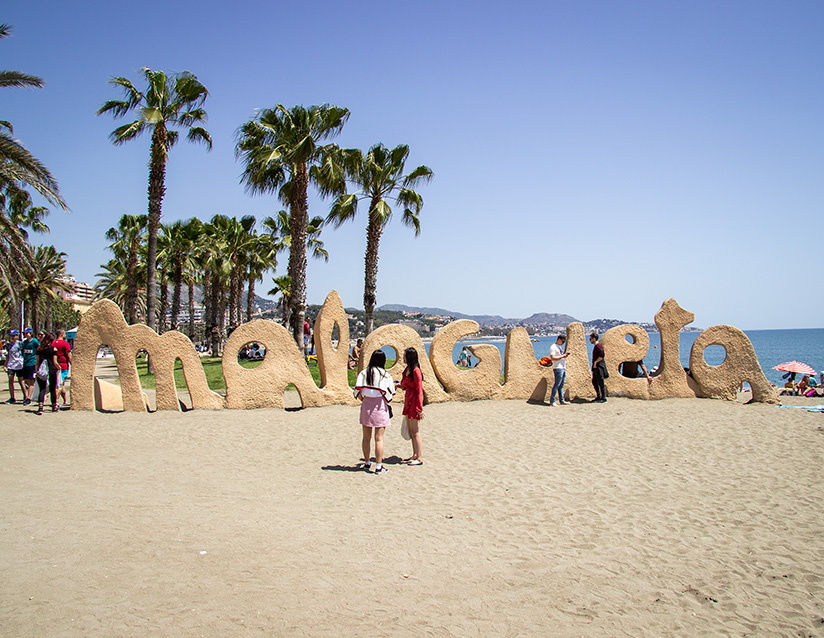
15 Relax on the beach
One of the great things about Málaga is that you have easy access to great beaches. Malagueta is closest to the city center and you can walk to it along the harbor promenade in around 10-15 minutes.
Take a break from the city’s many attractions and lie on the 1.2 km long beach of fine sand to enjoy the Andalusian sun and a cool dip.
On the beach you can hire sun loungers and parasols, and there are plenty of beach bars where you can refuel with drinks and a bite to eat.
More travel tips for Málaga
If you love museums, read the guide to overlooked museums in Málaga.
For tips on great tapas bars and restaurants in Málaga, read my guide to six of Málaga’s best eateries
In the guide to cafes in Málaga, you’ll find tips on great cafes in Málaga where you can drink coffee, have breakfast, lunch and cake.
If you fancy a day trip out of Málaga, I recommend you visit the spectacular white village of Setenil de las Bodegas, built into the cliffs.
Alternatively, you can visit Nerja with the Balcony of Europe and the beautiful Frigiliana.